


If love is kind,
it is not cruel .
If love is not jealous,
it is content.
If love is not pompous,
it is humble.
If love is not inflated,
it sees rightly.
If love is not rude,
it is enlightened.
If love is not self-seeking,
it is generous.
If love is not quick-tempered,
it is tranquil.
If love does not brood over injury,
it is reparative.
If love does not rejoice over wrongdoing,
it offers compassion.
If love bears all things,
it does not turn away.
If love believes all things,
it does not deny.
If love endures all things,
it does not cede.
If love never fails,
it always triumphs.
There are jewels to be found throughout ancient scripture, and in this exploration, we’ll look to both Western and Eastern wisdom traditions. In the Christian tradition, the New Testament offers one approach to love and to loving. When we look in the tenth chapter of the Gospel of Luke, a scholar of Jewish law asks Christ, “Teacher, what must I do to inherit eternal life?” Jesus says to him in reply, ““What is written in the law? How do you read it?” The scholar responds with what we know as The Greatest Commandment: “You shall love the Lord, your God, with all your heart, with all your being, with all your strength, and with all your mind, and your neighbor as yourself.” Jesus replies to him, “You have answered correctly; do this and you will live” (Luke 10:25-8).

From this quick exchange it seems our purpose on earth is simple, our mission, obvious, and the answer to the question of inheriting eternal life, a short one: love. That’s it. Nothing more, nothing less.
However, as simple as love appears to be, isn’t it simultaneously complex? What, exactly, is love?
In his first letter to the Corinthians St. Paul articulates clearly and beautifully what love is and what it is not, what love does and what it does not do. And he acknowledges that our actions can be either devoid of love or infused with it. We can serve in bitterness and resentment or in humility and compassion. Even our most helpful of actions can be empty of love, performed in a negative spirit that crushes our own and that of the recipient. St. Paul even goes so far as to proclaim that love is the greatest of all virtues, greater than faith and greater than hope: “Love will remain even when faith has yielded to sight and hope to possession” (USCCB Commentary).
Thankfully we can look to these guidelines and explanations of love to give us a starting point, a kind of pathway forward, but I know how much I stumble and wander about aimlessly, how often I fall and clamber in the dark of my ignorance, for even though I hear the encouragement, “love one another as you love yourself,” it is as if I do not have ears; I still find myself begging to understand how.

The Greatest Commandment, love one another as you love yourself, assumes that we already know how we are to love ourselves.
Zen priest and founder of the Center for Transformative Change, Angel Kyodo Williams, describes love as space: “[Love] is developing our own capacity for spaciousness within ourselves to allow others to be as they are — that is love” (OnBeing interview with Krista Tippett).
If love is space, it is not a vacuum; it does not pull all things into itself but expands and allows people to be who they are. Love makes room for the full expression of the human experience. Unfortunately, there have been many times in which I’ve been loveless. I’ve had a habit of pulling all things into myself, making myself the center of the multiverse, sucking the life out of life, leaving no air left to breathe, not even for myself. I have been selfish, prideful, vain, and vacuous, full of disdain, contempt, and self-righteousness, as I suspect most of us have at one time or another. It is a crushing cycle to find oneself in, as it hurts others, as well as ourselves, and on multiple levels.
I want to choose space.

Choosing space is hard.
It’s good to remember that love is not passive; it’s an action. To love is an act of the will; it is to choose, and we can’t make choices without awareness. To be aware is to choose to see rightly, to see ourselves as we really are, without quite so many labels, inherited or created, without stories in which we are always the protagonist; but instead, to choose to see ourselves simply as children of God worthy of love, worthy of forgiveness, by our sheer existence. Awareness can help create this space to see, this space in which we can choose, this space to act in love.

All this takes practice. When we work on our yoga mat to create space in the body for healing, we do so with awareness. When we work on our meditation mat to create space in the mind for choice, we do so with awareness. And when the mind is able to choose, we are able to work in our daily lives to create space in the spirit for loving, ourselves. The hope is that if for a moment we can focus on the newly budding leaf, instead of the tree trunk, perhaps we will be able to notice for even an instant our constant spirit, instead of our changeable thoughts and emotions, and from inside this space, this separation between ourselves and our thought-feelings, we will find compassion for ourselves, for our families, for our friends, and for each person we encounter.
Creating space isn’t easy. It requires openness of mind and heart. This can be unnerving and can seem irrational. As human beings we strive to protect ourselves from the possibility of physical, mental, and emotional harm and to fulfill our basic needs. This is survival mode, and it causes us to lose touch with others and even with our truest selves. As we frantically search and scan our surroundings, our circumstances, we become absorbed with negativity. When this is our baseline functioning, we run the risk of closing in on ourselves, forgetting who we are, and who we are in relation to those around us.
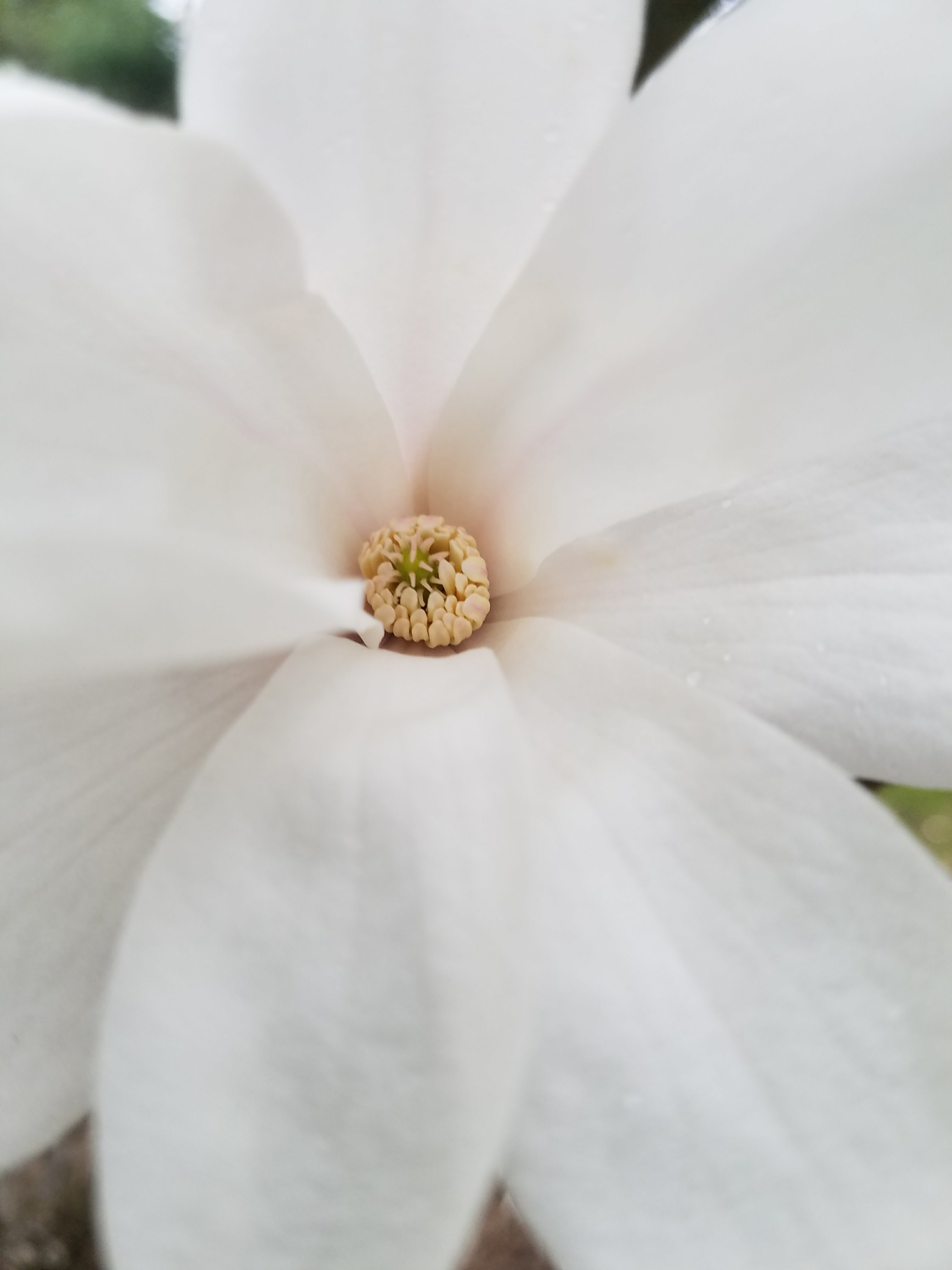
But we can try, little by little we can try to find that necessary spaciousness. What can we practice letting go of to make space for something else, something like welcoming, like embracing? Making space for ourselves, and making space for one another are true acts of love. Even paying close attention is loving, for where we place our attention, there also is our love. Bringing our awareness to the present moment, including the people and events within that moment, and allowing space for the moment to be what it is, is living in love.
Our practice will lead us to the answers. We’ll figure out what needs letting go of through practice, as it is truly our own best teacher. Yoga instructor Bryan Kest speaks of a yoga practice on the mat as being like a mini-day, or a mini-life in which we encounter obstacles and challenges, and we practice being with them with equanimity, so that when we go out into the world we function from this baseline of non-reaction, with gentleness and self-compassion as our default mode. It is only practice that teaches us, only practice that creates in us the capacity to grow in wisdom and expand in love. It is when we retreat, when we hide, when we close in on ourselves through fear that our chests tighten, our hearts constrict, and our capacity for love diminishes. Kyodo Williams encourages us when she says, ” for people who are not monastics, the world is our field of practice.”

So we get on our mat every day; we let go of reactiveness, harsh self-criticisms, vanity, and greed; we start to create space for healing, for choosing, and for seeing rightly. Then we take that spaciousness off of our mat and into the moments, the circumstances of our lives, and we practice some more, and we practice again, and unceasingly, like prayer.
Love is not cruel; it is supportive and humble. Love sees rightly and is enlightened. Love is generous, tranquil, forgiving, compassionate, courageous, honest, eternal, and triumphant.
Love bears all things because love is spacious. When we understand this and put it into practice by giving ourselves the space to be who we are without judgment, we will be able to give this same nonjudgemental space to others. From this place we will hear the encouragement, “Love one another as you love yourself,” and we will know.
Space is ever-expanding. So is love. Love never ends.


 Generous Wisdom | Spacious Heart