
Setting intentions for a new year (PART 2): 4 encouragements to keep your light shining

In Part 2 of this series, you’re invited to be curious about different ways to live out the intentions you set in Part 1, specifically, ways to take action, stay motivated, access creativity, and overcome hardship.

“The light shines in the darkness, and the darkness has not overcome it.”

– John 1:5

Living Out Your Intentions

Saying a big Yes to God can be difficult, even scary. But when saying yes to God is also saying yes to our truest self, the path can be much more fulfilling and something for which we brim with gratitude.

In part one of this series you used a meditation to discover your sankalpa, or vocation, God’s unique calling for your life that can evolve and shift as you grow and change. When I practiced setting intentions last year, I realized that my heartpath was one of service. One of my deepest longings is to feel that I have a purpose, and one way to do that is to offer my gifts and talents where I find a need for them. My intention setting this year revealed that another of my deepest desires is to be at ease in my connections with others. This one seems much harder than last year’s! Mostly because being at ease is an internal state of being, so I have to figure out what actions I can take that will manifest this. And, while life is definitely good and sweet, with its unexpected hills and valleys, tidal waves and doldrums, it certainly takes a lot of navigating. At times this can make living our heartpath, while both fulfilling and joyful, quite challenging.
However, God did not give us a spirit of fear, but of power, love, and a sound mind (2 Tim 1:7). So when you feel your light fading, remember that you are a child of God, filled with the light and power of Christ (John 1: 12-14).

Below you’ll find some suggestions for how to keep your intentions in your awareness, live them out each day, and keep your light shining. Remember, God isn’t going to ask you why you were not Moses, Ghandi, Mother Theresa. God’s not going to ask you why you were not your grandmother, your father, or your best friend. God’s going to ask you why you were not you, the unique person God created you to be. (This is inspiration enough!) So keep your light shining and walk courageously along your heart’s path!

Action

The spiritual life is both contemplative and active.  While it can be difficult at the beginning and throughout the journey, if we hope to embody the fruits of our contemplation, taking action is necessary.  Choose one concrete action based on your intention, and do it. Daily.

“Concrete action” can take many forms. For instance, if your intention is to create positive change in your family or workplace dynamics, your action might not be something obvious like initiating special prayer times or hosting a non-violent communication seminar (though it might!) Your action could be something as invisible as shifting your own thought patterns. When you notice a negative thought, consciously searching for the positive counterpoint is sometimes a sheer act of will.

This kind of action is only obvious to you, but it can have enormous impact on everyone around you. If your intention is to take care of your body, your concrete action might not be driving to the gym for an hour workout (though it could be!). Your invisible, yet still very concrete action might be pausing to take three deep breaths to notice if you’re physically hungry, or if your craving is mental or emotional and then choosing whether or not you will have a second helping at dinner. Again, this is another action that functions more like the wind: you can’t see the wind itself, but you definitely see and feel it’s impact.

Start by posting your intentions somewhere you’ll see them everyday. (Mine are taped beneath my bathroom mirror.) Then your first action can be as simple as repeating your intentions in your mind while brushing your teeth. You can also hold your intentions in your heart while getting dressed. You can even say them out loud before heading out the door. This kind of repetitive action will have a lasting effect: as you repeat your intentions in present tense, notice any felt sensations in your body or any energetic shifts. Does simply acknowledging your intentions allow your shoulders to lower, or bring about a sense of ease or lightness in your heart? If you notice a felt sensation in your body related to your intentions, it’s more likely you’ll be able to touch back into your sankalpa throughout the day. You’ll quite literally have a touch or a feeling associated with your heartpath that can come back to you at key decision points and allow you to make choices that are true to your calling.

I admit, sometimes taking action is super hard. By far, the strongest motivator for me to take action is other people.  When I am doing something for someone else, I show up and give my best effort because people are counting on me.  My students, my colleagues, and my family members are the reasons I put thoughts into plans and plans into action.  

When you begin living your heartpath, who will be the beneficiaries?  (Don’t forget to include yourself!)  Keep these people in your mind and heart and allow them to inspire you.  You might also consider sharing your intentions with one or two people close to you and offer to hold theirs, as well.  Check-in with each other often for inspiration, support, and encouragement.

Staying Motivated

Getting motivated is one thing, staying motivated is another. To cultivate longstanding inspiration on your heartpath, investigate the science, touch back into your sankalpa, and celebrate the successes of staying true to your intentions, both large and small. 

Habits are a huge part of being human, and it’s possible that various habits can block or hinder living our heartfelt desire.  Numerous studies show that habits are created by repetitive actions* over the course of 14, 24 or 40 days.  Consider just one or two intentions, look to the deepest layer of your heart’s desire, and set your eyes on a stepping stone of 10 days; notice the positives and celebrate them!  When you enjoy the benefits of your hard work, you are more likely to keep going.  After that, 2 weeks, 4 weeks, and beyond will seem a bit easier and the rewards a bit greater.**

*This is also true of thoughts and emotions.

**Please keep in mind not all habits are changed or created in a short amount of time.  Some long held behaviors can take months or years and require the guidance of trusted counselors or medical professionals. 

Creative Ways to Practice

Because your calling, sankalpa, and intentions are scandalously particular to you, I can’t really offer specifics.  However, being creative can simply mean doing something in a way you, personally, wouldn’t think of at first go.  Ironically, sometimes living from our truest self can mean letting go of what we think makes us us. The terms “true self” and “false self” were first used by Thomas Merton, 20th century writer and Trappist monk, and are now used by Fr. Richard Rohr “to clarify what Jesus surely meant when he said that we must die to ourselves or we must ‘lose ourselves to find ourselves’”(Mark 8:35).

Consider a thought experiment and approach your intentions from someone else’s perspective.   How would your friend, neighbor, or coworker put this into action?  Would your cousin, sibling, parent, or elder have a different plan? Remember the WWJD bracelets from the ‘90’s? Well, what would Jesus do in your situation?

Remember, changing habits and creating habits means doing something different.  And you don’t have to come up with all the answers on your own:

  • Ask the close friend with whom you shared your intentions for their thoughts.  
  • Ask a group of children for insight.  Tell them, “I’m going to practice ________.  Do you have any ideas about how I could do this?”  (Often, these ideas are the best!)  
  • Be open to the creativity of the Holy Spirit.  
  • Consider letting go of expectations as you ask God for guidance, inspiration, and opportunities to open up in front of you.  
  • Start looking for what you hope to find.   Search for opportunities to practice your intention and you might begin seeing them everywhere!

Overcoming Hardship

Self-Compassion has great benefits.  Being compassionate to yourself involves recognizing your struggles as part of the shared human experience, and it brings about mental, emotional, and physical well-being.  Touching back into your sankalpa, and the truth that you are already all you need to be, encourages resilience.  It can also bring comfort and the agency to continue making choices based on how you want to show up in the world.  

“Above all else, be gentle with yourself.”

Using God’s eyes, look to the big picture, the long term.  When you find yourself in what looks like a slump, or what you might reactively label as failure, above all else be gentle with yourself.  Be as forgiving and as kind to yourself as you would be to your friend.  Then, touch back into your sankalpa and call to mind the felt sense of living from a place of wholeness.  Call to mind the felt sense of well-being you experienced during your meditation and after a few days or a couple weeks of practicing living your intentions.  Acknowledge that you are, indeed, enough.  And you have within you all you need to live out your God-created calling.  

“Let nothing disturb you,
Let nothing frighten you,
All things are passing.
God never changes.
Patience obtains all things.
Whoever has God lacks nothing;
God alone suffices.”

– St. Teresa of Avila

May you know Love, Light, and any amount of Action!

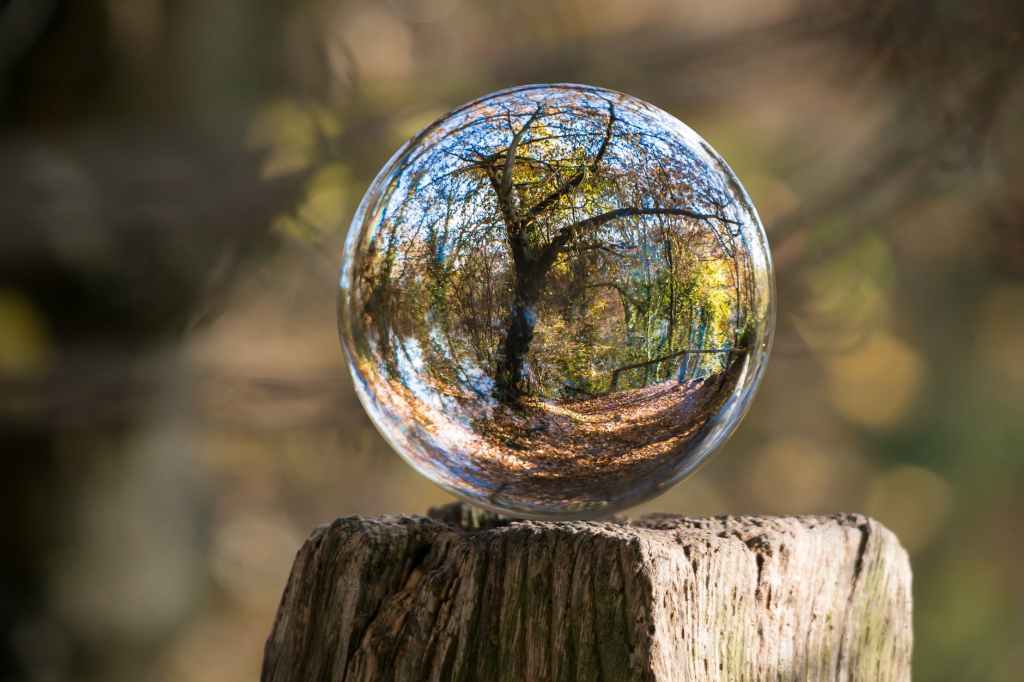
(photos by pexels)

Intentions for a New Year (PART ONE): Discovering Your Sankalpa

In part 1 of this series, you’re invited to explore setting intentions for the year ahead in a way that doesn’t start with classic self-improvement but rather begins from a place of wholeness. I hope you’ll indulge in this 15 minute meditation to help you explore intentions based on your heart’s deepest desires.  (Part 2 includes 4 encouragements to help you live out your intentions.)

“Love is the fundamental and innate vocation of every human being.” 

 – Catechism of the Catholic Church, 2392

The Beginning of a New Year

Having marked the Baptism of the Lord last Sunday, we are now past the Christmas season and have moved through the sweetness of Christ’s Epiphany.  Indeed, we have finally landed squarely, solidly, in Ordinary Time. Hallelujah! 

I always feel a sense of sweet relief in this quiet space between so many Holy Days and Lent.  There’s no pressure here, nothing to mark, note, or celebrate, nothing big to make a lot of magic for, and nothing crucial to teach my children relating to fundamental theological meanings and how that should be integrated into their lives.  Instead, I can focus on the simple things, like Love.  (Ha!  I know — Love is as complicated as it is simple.)  

However, it is still January, and turning the calendar to a new year can bring up a lot of emotions.  It can be exhilarating, as if we are opening up a world of possibilities that somehow we couldn’t access in December.  And it can also produce feelings of anxiety, overwhelm, or even dread. If we expect ourselves to enact a long list of changes we think we need to make, or countless “shoulds” we don’t even want to think about, “Day One” of our Big New Plan might find us plowing ahead doing the same old things we’ve always done.  We can find ourselves in an elaborate attempt to avoid change. In this case, burying our heads in the sands of Ordinary Time seems mighty convenient.

Resolutions & Intentions

Awhile back I let go of traditional new year’s resolutions and have focused on setting particular intentions that help guide my decision-making, both large and small.  Traditional new year’s resolutions aren’t bad. In fact, they’re wonderful when used as clues to deeper longings. They usually point toward the deep human longing for loving attention, respect, security, and companionship.  In my experience, though, I noticed that “setting resolutions” didn’t quite help me change my behavior beyond a couple of days. They usually felt big and unwieldy, “out-there” theories without any practical applications to go along with them:  I will be healthier.  I’m not going to be selfish.  I will lose all the baby weight.  I’ll practice yoga more. I’ll stop complaining.  I won’t eat sugar. I will exercise everyday.  Do any of these sound familiar?  Big goals like “I will ______” or “I won’t ______”  can seem random or even shallow, and sometimes completely out of reach.  In this vein, our approach to resolutions can lack an action plan, or a set of mini-goals that act as stepping stones to get us where we think we want to go.  Intentions, while still existing within the mind and heart, can function like those much needed stepping stones by offering a foundation of relevance – the big Why.  For instance, if your goal is to lose weight, what’s the reason? Is it to feel better, look better, fit into your clothes better? It might be, and those are all appropriate responses. And deeper than those, would losing weight allow you to move through the world in a different way, experience kind attention, connection, respect, and love? If so, is losing weight the only way, or the best way, I can experience this? Look for the reasons beneath your goals to find your intentions.

Intentions & Sankalpa

Basically, an intention is how you want to show up in the world and why.  In Yoga practice intentions are born out of your Sankalpa.  Sankalpa is a vow or commitment to a higher truth and refers to a heartfelt desire, an expression of your deepest longing to be of service to something greater than you.  In short, it is your heart’s truest path, your dharma, and when you’re on it, you feel a sense of purpose, gratitude, and joy (typically, in that order!).  In Christian practice, sankalpa can be likened to God’s calling for you, your vocation, which can grow and change as you move through different phases of your life.  Both sankalpa and God’s call assume that you are already all that you need to be to manifest this truth.  This is a wildly different approach than the classic I’m not good enough as I am.  And I won’t be good enough until I do X, Y, and Z.  This coming from a place of wholeness (rather than a place of brokenness) is one of the greatest comforts I know and is a true gift.  

Living what you are meant to live can feel as though you’ve finally slipped in the last shape of a 1,000 piece puzzle.   There’s a sense of completeness, that you’ve finally figured it all out, that you know who you are and why you’re here. However, because life includes aging, tragedies, and all manner of suffering, the path will not always feel smooth, nor will it always roll out obviously and effortlessly in front of you.  Purpose, gratitude, and joy are definitely part of the emotional experience of living out sankalpa, but so is challenge and difficulty, and sometimes even confusion because we are human and occasionally stop paying attention, ending up sideways.  Both sankalpa and God’s call acknowledge a powerful paradox, or mystery — that while we come from a place of wholeness as sacred beings who share in divine nature, we are also always in the process of realizing, or manifesting this fact. In many spiritual traditions, including Christianity, this is sometimes referred to as becoming fully human, or, being and becoming.  

This coming from a place of wholeness is one of the greatest comforts I know and is a true gift.  

Heart-work like this takes patience, courage, and fortitude.  Pray for God’s Divine Providence and guidance, the Holy Spirit’s power and truth, and Christ’s unfailing, steadfast support that is always and forever at your very core.  With wisdom and discernment, all you need to do is ask, seek, and knock (Matt 7:7-11).

Discovering Your Sankalpa, A Meditation

Please know that it’s totally okay that you’re reading this mid-January.   And it’s super-okay if you are reading this in February, or at the end of March.  Nothing needs to happen on the first day of the year, the first day of the month, or the first day of the week.  Any time, Wednesday at 1:37 in the afternoon even, is the perfect time for a new beginning. It’s quite a beautiful practice to give space and time to allow intentions, ideas, and plans to percolate for a bit at the beginning of any new season.  For me, taking the first week of Lent to allow God to nourish in me the actions I’ll take over the next few weeks takes all the pressure off. Basically, we don’t need to have it all figured out before we start — another sweet relief!

For those of you who follow the liturgical calendar, you might have begun your new year on the first day of Advent, and perhaps you are already in a sweet groove of manifesting your intentions.  If so, this meditation can serve as a reminder, reset, reimagining, or a reinvigoration. Think of it as encouragement when your courage is waning and as a heartening for your heart’s truest path.

A MEDITATION PRACTICE FOR DEEP INNER LISTENING

Inspired by the work of Richard Miller, Kelly McGonigal, and Thomas Keating, I’ve created the following meditation to provide time and space to be curious.  

Set-Up

Choose a time of day when you can allow fifteen minutes for the meditation and anywhere from 5 to 15 minutes for reflection.  

Before you begin, notice that reflection questions are provided for you below the audio file.  Collect a journal, pen, and any art supplies if you’d like to draw your reflections.  

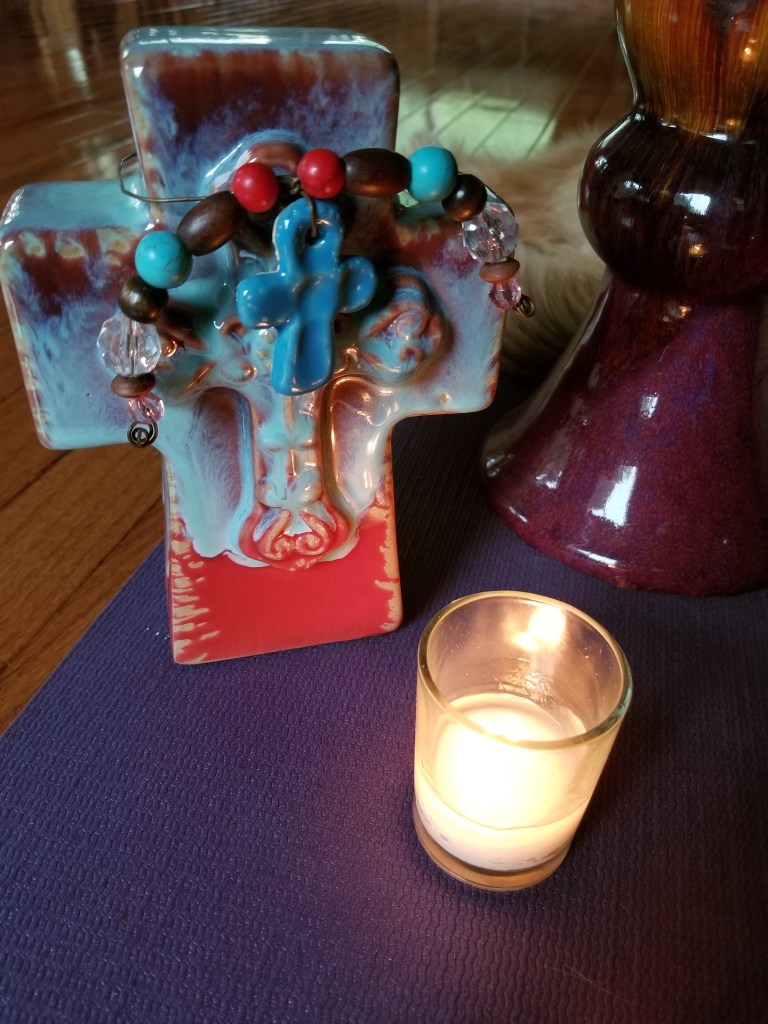
Set up a yoga mat with supportive props.  A chair is another option, as you can practice this meditation lying down or seated.  If you think you might fall asleep, choose to sit upright in a sturdy chair. If your body is in need of restoration, choose a deeply supportive version of corpse pose using blocks, bolsters, and blankets arranged in “queen’s pose/lazy boy pose,” any other savasana variation, or legs up the wall pose.  Then start the audio posted below.

Meditation for Discovering Your Sankalp by Amy Dobson Secrist

_____________________________________________________________

_______________________________________________

Reflecting on Your Heartfelt Desire 

Based on your meditation, consider answering any or all of these questions in words or drawings to discover your sankalpa:

  • What brings me joy?
  • What experiences allow me to feel fully alive?
  • What is my heartfelt desire?  (State your heartfelt desire in the present tense rather than in the future.  This reminds you that you have all you need and are already capable of manifesting your higher truth.)

Setting Intentions

Based on your meditation, consider answering any or all of these questions in words or drawings to help set your intentions:

  • Because I am already capable of living my heartpath, I make a commitment to show up in the world as I truly am, a person who is  ______________.  
  • What resources are already in place for me to follow my heartpath?
  • What other resources might I pursue?
  • In my daily life, what actions am I already taking that manifest my heartfelt desire?  
  • What actions can I commit to in my daily life that support my calling?  Are there any specific decisions or changes that I can commit to that support my intentions?
  • Because I am already capable of living my heartpath, the first step I will take is __________.

Next Steps

By practicing this meditation and reflecting on what you’ve discovered, you’ve already taken a big first step.  From here, take care not to pressure yourself to get it all right, exact, or correct. Invite the Holy Spirit to work in you and through you. 

One practice that can feel like perfect swaddling is to choose just one word, almost like a theme for the year ahead. Many Christians practice this by spending time in prayer during the weeks of Advent, or throughout the Christmas season and holy days, or for a shorter time at the beginning of the calendar year.  Your time spent with God in meditation, uncovering your sankalpa, can be a part of this word-choosing as well. Consider inviting the Holy Spirit to reveal your word to you, either through deep inner listening, scripture reading, or interactions with friends, family, and others. Your reflections on this inner listening meditation can most likely be distilled and encapsulated in one word.  Take a look, offer it to God, and see!

Moving Out into the World

Your intentions guide your days moment by moment, or decision point by decision point. When you find yourself ready to make a particular choice about something, what you’ll say, how you’ll act, touch back into your sankalpa, your intentions, or your one guiding word. Your inner truth that lives deep within will nudge you in the right direction. Don’t be afraid to follow your path!

Transcript 

Welcome to your meditation practice of deep inner listening.  In your own time, allow your eyes to close or soften your gaze, and begin to notice your body through sensation.  Notice where your body makes contact with the supports beneath it and any sensations that might be present here. Notice any amount of gravity, a gentle downward force connecting your nervous system to ground.  Invite a sense of spaciousness into your body, a sense of non-compression in your joints. Notice any sensations of heaviness, lightness, or both of these. At your own command, invite a deeper breath – a comfortably deep inhalation, and an easy exhalation.  Take two more breaths like this. Now, give the work of breathing back over to your body and give the weight of your body into your supports. Allow the body to breathe you, rather than you breathing the body. Notice how it feels to be breathed, to be cared for. 

If it is in your practice to do so, please begin your deep inner listening by consenting to God’s presence and action within you.  A nod, a smile, a big hello inward in God’s direction. Invite the guidance and wisdom of the Holy Spirit to be present within and around you.  Know the comfort of God’s great care for you.  

Bring your awareness back to sensation.  Notice any sensations anywhere in the body as they arise, stay for a moment, and fade away.  Notice that your body is breathing. Notice the breath coming and going. Now, notice who is noticing.  This is your awareness, the part of your mind that knows experience. Invite your awareness to notice your mind and any thoughts present here.  Allow them to settle. Release any amount of expectation feeling safe and secure, cradled in God’s great care. Return to this experience of ease, your inner sanctuary, at any time.

Suspend judgment for the next few moments. Suspend analysis.   Invite a sense of spaciousness, invitation, and inquiry. Become curious about your heartfelt desire.  Welcome, with a sense of hospitality and friendliness, whatever arises. Any thoughts, images, emotions, and sensations that come into your awareness are like messengers.  Welcome them as guests and be curious about what they wish to share with you. As you practice this self-inquiry, allow your thoughts, imaginings, and emotions to be spontaneous, without analysis, or judgment, and without feeling the need to change, fix, or wish they were different.  It is normal and okay to not have an immediate response, or to not know the answers. Remember that you come from a place of wholeness. 

Begin to notice your connection to ground.  Notice your breath. Your inner sanctuary. 

Now, imagine yourself smiling and happy.  Notice what happiness feels like in your body.  Notice what brings this about in you.  

Call to mind any specific goals that you have been wishing for or working toward.  Do these goals inspire your smile or bring about your happiness?  

What deeper longing lies beneath these goals?

What amount of this experience that you deeply long for is already present in your life?

Now imagine yourself smiling and joyful.  What does this feel like in your body, where does joy live in you?  Consider what experience allows you to feel this profound joy.

What opportunities to experience joy and comfort are already present in your life?  How are you already exploring more experiences that allow you to feel joyful, comforted, and fully alive?

In your own time, notice any obstacles that might be present.  Notice one obstacle and welcome it as a messenger. Does it have a shape, a texture, a color?  What else do you notice about this obstacle?  

Become aware again of your awareness, and the presence of God within you.  Notice any amount of security, comfort, and ease that exists here. Know that this is available to you at any time.  Touch back into God’s presence. Know that you are secure, deeply loved, and held. You do not need to be fixed. Know that your wholeness depends on nothing.  You are a whole human being, fully present, and fully alive.  

Invite your awareness back to your breath.  Notice that it’s been here all this time, caring for you.  In your own time, invite your awareness back to your body. Notice any amount of heaviness, lightness, or both of these sensations.  At your own command, invite your breath to deepen. Breathe in comfortably deep, and breathe out in any way that feels right. Take two more breaths like this, noticing how your body responds to this bigger breath.  Before inviting formal movement, simply notice your fingers and toes, hands and feet, your arms and legs, neck and head. If you feel it would be interesting, consider blinking open your eyes or lifting your gaze to notice whatever texture, color, or shape is in view.  Notice that your are fully awake while your body is very much at ease. When you feel ready, invite movement into your fingers and toes, your hands and feet, then arms and legs, neck and head. Then, begin to move and breathe in any ways that feel right.  

In your own time, find your journal and supplies.  Write or draw about your experience in your own way, or use the written questions to guide your reflection.  May you know peace and wholeness.

Waking Up & Lighting Your Own Way: How Creating Space for Advent Allows God to Nurture You

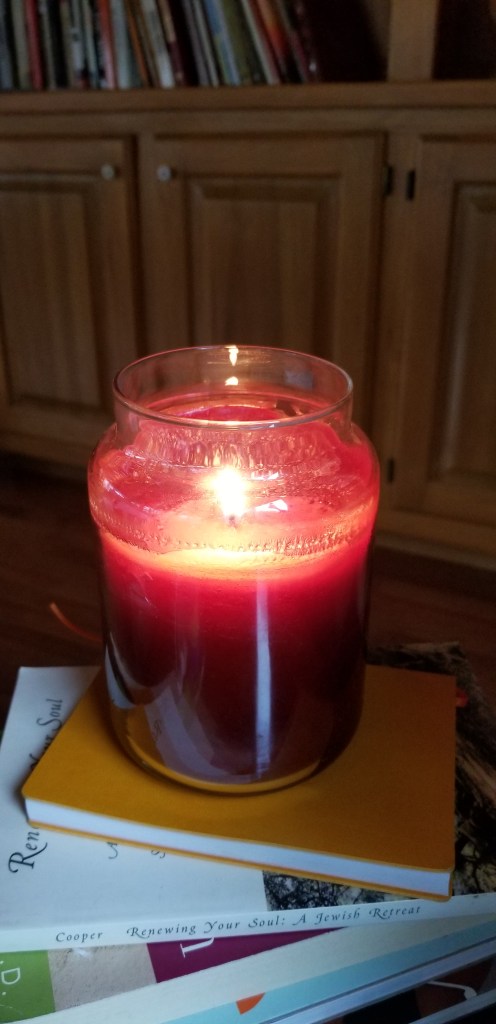
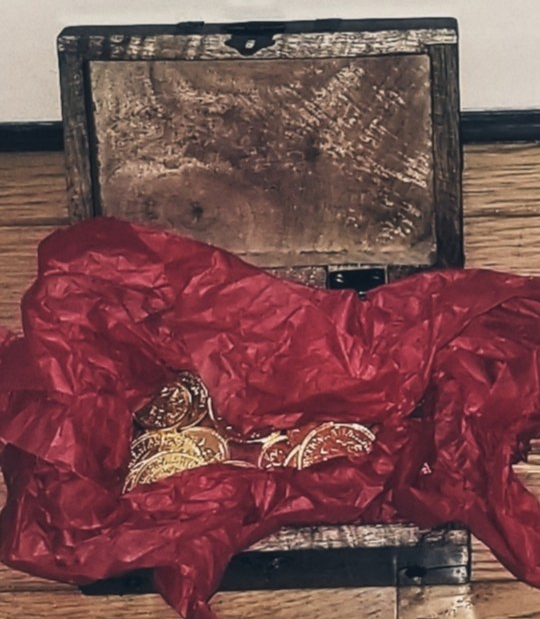
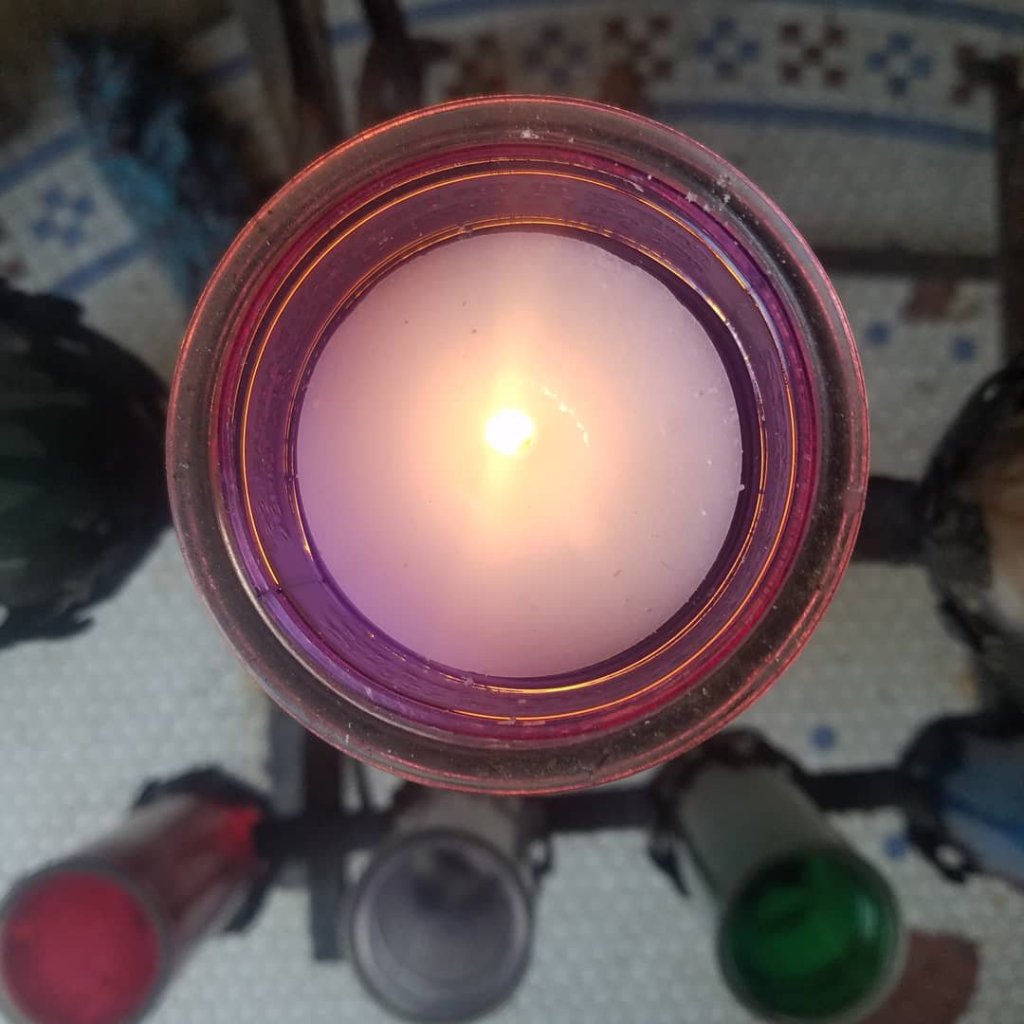
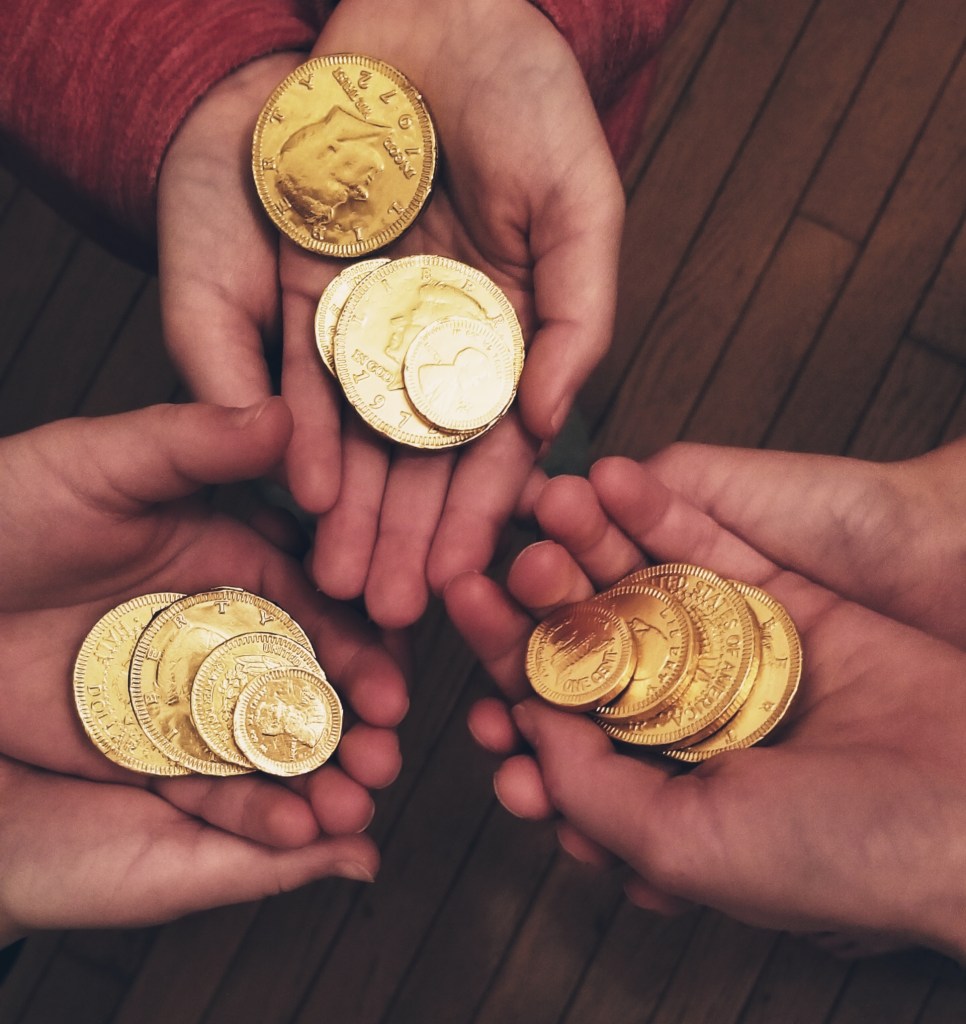
I am sitting by candle light in the early morning hours while I write.  This isn’t typical, but I needed to get some words written before the household began stirring, and I needed something to off-set the glow of the computer screen.  Now that it’s flickering in the corner of the living room, I realize it puts me in mind of the times I light a candle during my yoga practice and the times I have a candle close by when I sit with God in a formal, disciplined way.  Now my writing time feels holy, which is a comfort I didn’t realize I needed. I’ve only just begun to type, and I hear my children whispering excitedly about what St. Nicholas has left them in their shoes. The three youngest ones are never awake this early, but with their shoes lined up at the front door holding chocolate gold coins, I guess it seems obvious that 6:30 is a good time to be awake.

St. Nicholas Day is celebrated on December 6th and this year appears during the first week of Advent.  The word advent means both the coming and the arrival of a thing or person of great importance. In Christian tradition, the season of Advent evokes themes of eager anticipation, hope, and joy.  It also holds space for patience, perseverance, and preparation. For the vast majority of Christain practice, Advent was as much a somber and penitential time as that of Lent, the time preceding the resurrection of Christ at Easter and includes prayer, fasting, and almsgiving.  Indeed, these are still mainstays of our Advent tradition, though in modern times, Advent can seem to be nothing but a swirl of festive activities, celebrations, and parties. Because of this, it is extremely challenging to create a sense of balance, intention, and purpose. Scripture can help guide us here.  Readings for the first week of Advent speak of awareness and readiness, and both Paul and Jesus exhort us to notice that “now is the hour for you to be awake from sleep,” and “you also must be prepared” (Rom 13:11-14; Mt 24: 37-44).   

In preparation for sharing my experience as a Christian who practices yoga, I spent the last weeks contemplating my relationship to Christianity and my love for the incarnation, the sanctifying act of Emmanuel, God With Us.  And I’ve contemplated with equal intensity, my relationship to yoga practice and my gratitude for its impact in my life. Going to bed on St. Nicholas eve, I was absolutely determined to get something written the next day, because weeks (turning into months) is too long to wait for a good blog post to fall out of the sky.  And I prayed for the strength to make this happen because, obviously, I wasn’t getting it done on my own. God is always my inspiration, whether through nature, through people, or through practice. I try not to fool myself into thinking I’m the one who comes up with great ideas or clever metaphors. I just try to keep persevering, keep praying, and keep preparing. 

I opened my eyes this morning at six o’clock and thought about how great it would be if I got out of bed, took care of our energetic cocker spaniel-shar pei, and started writing.  I thought about lighting that candle before I realized I would need it, for physical light but also for spiritual comfort — I don’t believe this was coincidence. I thought about the ways yoga brings me immediately to myself in the present moment, where life is, where God’s presence and action are visible within me, my breath and my heartbeat.  In these present-moments I say hello to my body, hello to my awareness, and hello to God. And it was that last thought of the chain reaction, the ripple effect, body, breath, God, that got my feet to the floor.  It was that last thought of God coming to me in and through my own body that got me out into the cold December morning with our soft and fuzzy dog by my side.  That last realization gave me the energy I needed to leave my cozy bed so I could get here, to this computer, to write this down, to share with you, to not forget why yoga is so important to me:  I choose yoga because it is relational; it puts me in relationship with myself and the three-person God I worship, the Trinity, the epitome of relationship.    

My formal study of these relationships through yoga practice began in 1996 when I was nineteen.  It was a hatha style class, outside in the grass and surrounded by trees, the uneven ground beneath us, the open sky above us.  After just a few classes the practice of noticing my body on the yoga mat translated to a habit of noticing my body in other situations, most notably, standing in line.  Tadasana (Mountain Pose, or, standing on two feet) was everywhere available to me.  Instead of sinking into my hip, shifting my weight back and forth, or folding my arms over my chest, I would center myself over the four corner of my feet, relax my toes, find a neutral curve for my lower back, soften my shoulders and lift the crown of my head.  (Are you finding yourself doing seated tadasana right now?) Before I knew it, I was practicing yoga everywhere. I loved how yoga practice got me to notice my body, then my breath, then the moment I was living, as reliably as clockwork. Standing in line became an opportunity for practice and presence rather than a chore or a burden. I was so intrigued I sought out deeper study, craving information and experience, knowledge and understanding.  Hinduism and Buddhism became magnifying glasses for me as looked through their lenses and discovered my Christian theology in a more nuanced and detailed way.  

I have kept studying and practicing, looking and noticing because there is no end to this journey.  Whether it is Advent, Lent, or Ordinary Time, the exhortation to be awake is a constant.  The practice of studying sacred texts and our sacred selves is deep, layered, complex, and fascinating, and keeps me staying awake.  The practice of posture and prayer while seemingly limited in options is infinite in experience because each day our bodies and circumstances are different.  The eight limbs of yoga are the toolkits out of which I learn to live this human life as a child of God, as a light-bearer of Christ, and as the hands and feet of Jesus.

I am sitting on the couch, awake, the dog, curled up by my hip after her meal and quick jaunt outside, is asleep.  The candle I didn’t realize I would need still burns near me. In the midst of writing the beginning of this post, I’ve taken the pictures you see here.  I’ve toasted waffles, drizzled syrup, poured coffee, tea, and chocolate milk, kissed, hugged, and blessed my family on their way out the door, cleaned the counters, ignored the floor, and settled myself in a different room because my laptop has battery and outlet accessibility issues.  I brought candle I didn’t realize I’d need to my new space, and it still burns though the sun is well over the horizon line, the flame’s constant movement reminding me that life is happening now.

The yoga practice I began over twenty years ago, the one I didn’t realize I would need, is a part of me and reminds me that I am living my life right now, not yesterday and not tomorrow.  When I find myself here, in the present moment, I whisper, “Good morning, God,” no matter if it is afternoon, evening, or in the middle of the night, no matter if I have just woken up or if it has been hours since I’ve crawled out of bed, no matter if I am walking contemplatively through the woods or if I am in the midst of a challenging and difficult set of circumstances with challenging and difficult people.  It is always good morning, because to notice God’s presence and action is to be joyfully awake.

Suggestions for Practice

Noticing the Breath & the Body

My first yoga teacher liked to remind us that we are human beings, not human doings.  This is very difficult to remember, especially if you notice that your sense of self-worth is tightly bound to productivity.  If you’d like to practice being, which is very much like being awake, you might begin right now:  pause in your reading and notice your breath.  You could also try to notice your breath for a brief moment throughout the day; how about every time you sit down, whether on the couch, in the car, or at the table? 

If watching the breath feels awkward, uncomfortable, or extremely unpleasant, you might begin practicing being by noticing sensations in your body, whether they are pleasant ones or irritating ones, right now:  how do your feet feel, cool, warm, tired, neutral? If it’s difficult to tell, wiggling your toes or rolling your ankles can be helpful. You could do this each morning before getting out of bed, or after brushing your teeth.  Even still, you could simply place the idea in your mind: today I will notice my feet. Then pay attention to see if it happens randomly throughout your daily activity. 

Something I find immensely helpful is to offer a prayer about it. Ask God to help you notice what it’s like to simply be alive.  This being alive is miraculous, and sometimes noticing it feels like a miracle, too!

Remembering Your Light

In the Catholic tradition, a candle is kept burning at all times near the tabernacle signaling that the Holy Eucharist is within; in other words, Christ is present here.  Perhaps you could light a candle, before you think you need it, to remind yourself of God’s presence within you.  Maybe set out several of the flameless kind that keep glowing at all hours.  This way when you open your eyes in the morning, the light is there. When you walk into your home after work, the light is there.  When your house is a mess, your children melting down, your partner in need, and when you are at a loss, the flame is there.  Whether it is winter, spring, summer or autumn, the light will be there as a mirror, reflecting back to you your own flame, your divine spark, your Christ-light, because you, my friend, are a temple of God, a holy tabernacle, a home for Christ Jesus.  This Advent your life can become His nativity scene, your home His stable and your Heart his manger.  

Prayer & Power

Prayer and power go together. What would happen if you prayed for the ability to wake up and light your own way?  How would God surprise you with comfort? How might you be nurtured simply because you took time and effort to do something a little different than your normal routine?  Remember, prayer and yoga are practices, so be gentle with yourself, know that you don’t have to perform, just show up.

You might have a consistent time each day or week that you set aside to pray. Maybe you have a scheduled time that you book to practice yoga at home or in the studio or at the church.  You might pray and practice yoga simultaneously, and also, you might not. It’s quite possible that your practices are spontaneous, surprising, and serendipitous moments that you scoop up whenever they present themselves; or perhaps you find yourself with a machete, chopping out chunks of time in desperation. 

Either way, any time is a good time to be awake, and especially during Advent when we can be on the look-out for incarnation, the indwelling of the Holy Spirit, the sacredness of the ordinary, the divine spark within each of us.  Have fun practicing. Yes, have fun.  It is good and joyful to be awake and see what chocolate gold coins God has left us in the darkness, in the night, and in the shadows of our every day.