The shape of sound – cicadas’ buzz rippling in the air
The shape of shadow – falling angles of light from the house windows
The shape of breath – cylindrical ribcage expansive, circular, contracting ribbons of bone
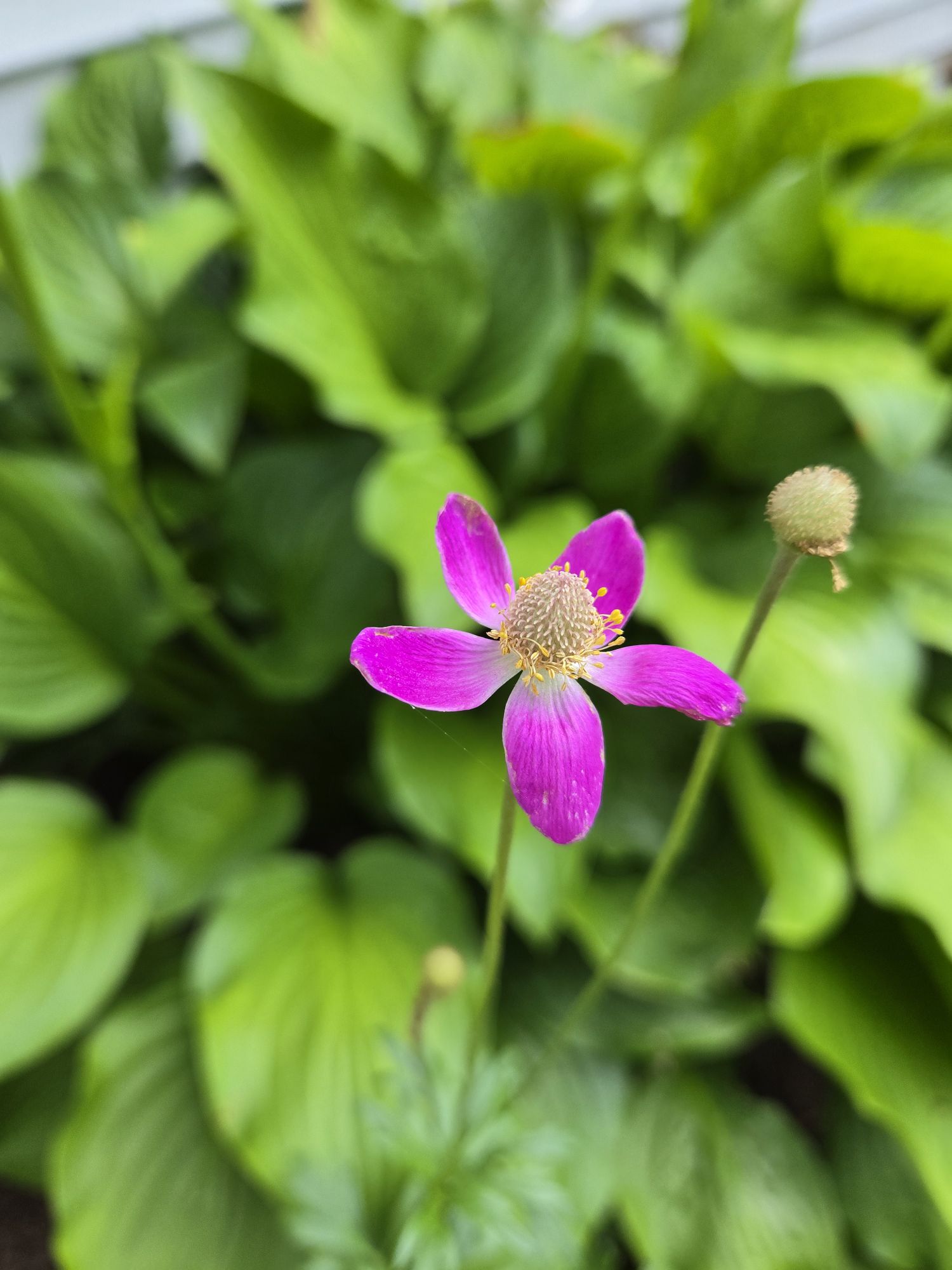
The shape of flower blossoms – doubled, orange begonias in an arc of crumpled fabric
The shape of sky – between leaves and branches, inverted butterflies
The shape of trees – moving in a wind I can’t feel
The shape of the hawk – rocketing out of the pine, arcing behind the house
The shape of space between the stars of succulents – always three curved angles
The shape of me? What shape do I make in the evening sky descending its shadowy deep blue light against my skin?
The shape of love – sometimes close, sometimes spacious – always pulsing, the vibrations rippling toward infinity.
There is so much to discover when we meditate on Shape.
Find your sit-spot. Just Be.
Notice the shape of sound, of texture, of air, of breath.
What shape do you make in the gorgeous sky?
What shapes are blossoming between your fingers, the lashes of your eyes, the parting of your lips, the curving angles of your sweet and precious toes, the arc of your nose?
What space, what shape does love make and take up in your living?
How is your heart’s spaciousness rippling toward infinity?
I spent a month sitting under my magnolia tree. Not a month straight. A month of mornings. And it changed the way I live. On the inside.
Several years ago I completed a meditation teacher training that prepared me to teach meditation to young people in schools. It was another jump into one of the “deep” ends of meditation, as people say, and it was glorious. Glorious in its supportive container, its approach, framing, and guiding – an abundance of wisdom and a swaddling of fellow travelers along the path. We had head-teachers, cohort guides, and companions. We all taught and learned from each other.
After I completed my practicum and received my certification, I celebrated by getting my nose pierced. And after our final online gathering I felt the emptiness of losing that nest, the organized safety net with its deadlines and accountability, it’s scheduled gatherings and required reflections. I felt the lack of those supports and routines immediately – an unmooring. I didn’t want my new way of being to fade, so I decided I would meditate every morning for thirty minutes. And I did.
I’m doing that again to create a book for us. Something we can hold to help us remember that we are humans being in the midst of all our doing. I’ll post some pieces here and hope you’ll share some feedback to help me craft what is most needed for your own dive into the deep.
When you hold one hand in another there is a heaviness that is both light and solid
your hand, I mean, I’m talking about when you hold the weight of your own hand
resting one hand inside the other a nesting
Try it now ~
Cupping your hands one inside the other sense the weight of you
sense the weight of tenderness.
How tender is your care for your own sweet self?
Try resting your shoulders and arms and let them be pulled toward the earth…
Allow the gentle downward force of gravity to be a soothing balm like you’re setting down every single thing you carry every single day
the things you hold even in the night in your sleep you’re carrying them ~
Just for now, just for this moment, set down what you are carrying.
Try this ~
Notice the sensation of your feet resting against the ground the grass the growing world.
Notice the sensation of your hips resting in the seat of your chair that’s resting against the ground the grass the growing world.
Notice the way the crown of your head is floating into the sky even as the the sides of your neck are softening the tops of your shoulders sinking and your arms elbows arms wrists hands fingers are moving closer to the ground the grass the growing world.
Notice the sensation of being held by creation.
Even as your body stretches upward with each of your breaths your body relaxes downward with each of your breaths
You are a growing being resting against the ground the grass the growing world.
So as you nest your hand inside your hand, become the tender loving care of the creation that holds you because you are what you have always longed for. You belong to your own dear, sweet, and precious self, a gift, from you to you.
Just for fun? Try this~
Notice if you’d like to switch the nest of your hands allowing the other hand to be the cradle of tenderness and loving care.
Feel the difference. It is new. Awkward. Lighter Maybe? It is similar. Odd. Fun Maybe?
Switch them back if you’d like. Notice the ways you are opening into choice, ease, and freedom inside the frame of this earth and sky, this greening grounding growing world.
You get to chose what your hands hold. You get to chose which things you pick back up. You get to chose to lift with your legs instead of your back. You can allow the earth to lift you and all the things you choose to carry.
Remember that as much weight as presses down on her, the sweet, dear earth pushes back up just as much.
You are not alone.
How do you feel now? What do you notice most? What is resonating deep inside you? What mysterious door have you walked through?
What is challenging you and what are the judgements your mind offers?
This post explores the science of emotions, the research on social aspects of teaching, as well as the work of embodiment and how it can support us in moments of difficulty or overwhelm. At the end you’ll find an offering to create space for empathy & compassion for yourself & others.
Emotions Dr. Eve Ekman is a contemplative social scientist and teacher in the field of emotional awareness and burnout prevention. She defines emotion as “a process that is triggered in 1/25 of a second, lasts only about 30 – 90 seconds, and helps us respond to important challenges.” Emotions get our attention and remind us of our values. Being aware of our emotions allows us to acknowledge them without criticism and make wise choices about our role in what comes next.
Community Community spaces are filled with people, and as such are filled with emotions, as well as lots of triggers! This is just as true for digital interactive spaces as it is for in-person events. Whether you’re a leader, participant, student, teacher, parent, child, or all of these and more, spending hours each day in social environments creates an opportunity for emotional exhaustion.
Research in education shows that practicing mindful awareness can help decrease burnout and increase an overall sense of well-being. Because this is true in K-12 learning environments, we can reasonably extend these findings to include a variety of other group settings, such as professional and corporate offices, fitness centers, child care facilities, nursing homes, hospitals, and community events – basically, anywhere there are facilitators and participants, anywhere there are people(!)
“Practicing Presence is the Seed of Empathy.“
Compassion Practicing Presence within community requires a certain amount of non-reactivity. Being able to notice and observe our own emotions allows for a space between what activates us (or triggers us) and our next thought, word, or action. The space allows us to respond skillfully rather than react choicelessly. It also creates pathways to take care of our own needs in the moment. This practicing awareness of our emotional process gives us insight into the experience of others, precisely because all of us are human. Happily, that new information we gain inside that moment of presence increases the likelihood that we can, and will, envision ourselves in someone else’s situation.
These are the seeds of empathy.
Teamwork
Empathy leads to another key aspect of mindful awareness, the active partner of non-judgement: compassion. What’s great about compassion is that it’s for everyone, including yourself, and it can really help guide challenging conversations and all manner of interactions.
Compassion allows us to see our life-partner, who is “letting the housework go” and seemingly choosing to not ask us about our day or our needs, as a beautiful human being who is fatigued and out of resources – not just someone who doesn’t care. Compassion also allows us to see the student melting down in front of us as another human, just like us, in need of support. Compassion can even bring us to a new perspective on the behaviors of our co-workers, family and community members, as well as complete strangers (and even people we might classify as the manifestation of enmity and animus – our enemy).
Everyone is a human being – just like us. This fact is an excellent reminder that, perhaps most amazingly, self-compassionallows us to see our own selves as deserving of gentleness, acceptance, and encouragement, too ~the hallmarks of empathy.
SPACE We experience emotions on a broad spectrum. There’s a wide range of ways we can know anger, fear, disgust, sadness, and enjoyment. And knowing that the initial emotional reaction only lasts 30 -90 seconds, it benefits us to wait it out, seeing if it subsides or changes before we say the thing we really want to say (that thing we feel absolutely justified in saying). The magic in this moment is patience. And one support for practicing patience is to go ahead do something.
Teamwork
Here’s an embodiment practice for that. I call it SPACE because I love talking about, thinking about, and accessing spaciousness as a pathway to loving and being loved. It’s a way of being present in my body that allows me both to notice and observe my emotions, as well as wait for them to change or subside before I choose my next thought, word, or action.
S – settle
P – pause
A – abide
C – center
E – expand
Basically, SPACE creates space. And space allows for compassion.
First, I settle into my body by feeling my feet and noticing gravity. I pause and breathe. I abide in the present moment. (Rest.) I find my center. And then I expand from there – breathing in and growing my ribcage in all directions.
By expanding, I’m creating physical space inside my body, bringing about sensations associated with happiness, freedom, and joy. I’m also creating intangible space between what is said and done, and what is understood and experienced. No one knows I’m doing this. I can settle, pause, abide, center, and expand while I am listening to another person speak or while I’m experiencing their actions. This embodied work allows me to feel grounded and gives me the space to choose what I will say and do, as well as what I will not say and what I won’t do.
Spaciousness
KEEPING ON
Continue practicing awareness. Keep non-reactively observing. Carry on with feeling your body and making space.
If nothing else, the next time you notice a strong emotional reaction, let that be your cue to press and settle into your feet and expand from your center. The breath will happen. You will pause and abide, and you just might find yourself and others surrounded by the spaciousness of compassion.
Your Practice
While you are moving through your unique morning ritual, practicing asana, concentration, or meditation, consider practicing spaciousness:
Settle into your body by feeling your feet and noticing gravity
Pause and breathe
Abide in the present moment
Center yourself
Expand and grow your spacious heart
Then, take this wisdom with you, out of your practice space and into the world!
(You don’t have to have a ritual that seems fancy or mysterious. Rituals can be practical! You can practice SPACE quite effectively, and beautifully, while you are brushing your teeth or enjoying a shower.)
With Love, Empathy, Compassion, & All Things Spacious







 Generous Wisdom | Spacious Heart