
Gravity: A Poem-Prompt

Below is the poem-prompt from yesterday. It now has a name 🙂

I wanted to share it again because I practiced with it after I posted, and I discovered some things.

It was late in the day, and the earth and sky were moving from evening into night.

As I was guiding myself, I noticed how deeply I had been in the practice during its writing, at my computer. I also noticed the familiarity of this gravity-awareness practice. It felt easy to sink myself into the earth, but difficult to stay present with it. My mind was busy offering me other things to pay attention to. I kept bringing myself back to the softness of my neck and the slope of my shoulders. The weight of my arms and hands pressing into my lap, my hips and legs pressing into the chair, my legs and feet pressing into the ground. Bringing myself back to these sensations. Gently. I invited myself to shift my body position when I needed to. After experiencing an insect bite during my meditation the day before, I allowed myself to brush a mosquito off my nose. When I noticed the change in air temperature, I allowed myself to pull my sleeves over my hands and tuck one inside the other.

In case I haven’t said this before (I don’t think I have), please remember that the meditations and prompts and practices are here to serve you. They are here as an invitation to self-discovery. They are not here to demand, control, or oppress you. They are gateways to freedom inside a frame of tenderness, loving-kindness, and care.

Only you can offer yourself these things: tenderness, loving-kindness, and care. Please try them out. Liberally and with joy, as you would praise a puppy for his sweetness and delight running through the grass after the white cabbage moth.


Gravity asks us what we want to set down and what we want to pick back up. When I arrived at these inquiries, happiness and kindness arose in my mind. I want to set down the weight of other people’s happiness. By this, I mean I want to set down the weight of thinking and feeling that I need to create, enhance, fix, and sustain everyone else’s happiness at all times. I’m not sure when or why I picked this up. But it’s real, and I need to set it down now.

Happiness comes and goes, just like overwhelm, just like sadness, just like tears, and just like giggles. When I attempt to fix or change someone else’s emotions, I’m making it about me. Instead, I want to pick up kindness and offer that. I want to offer the gift of sitting with someone in their despair. The gift of resting beside another person in their overwhelm. Without making it about me. And also, without looking away. To stay beside them by becoming porous enough to allow their emotional energy to swirl over, under, past, and through me, without it knocking me off balance. To have them know they don’t have to hide or fix or feel bad about their emotional experience in order to stay with me, physically present next to me, in the same room with me.

So, I’m going to try that today. Setting down the weight of other people’s happiness and picking up the ease of kindness. Kindness is being expansive enough, spacious enough to allow what is to be what is. Acknowledging the truth of the moment is a kindness deeper than almost anything else I know.


Please try out the body-scan meditation, the poem-prompt, Gravity, below. Even if you tried it yesterday. (Especially if you tried it yesterday?) As you open up to your inner knowing, see what wants set down and what wants picked up. And it’s okay if it doesn’t feel peaceful at first, or at all. Peacefulness comes and goes, too. What’s glorious is that we can create the circumstances that allow peacefulness to arise. We can create situations that invite peacefulness to bloom more often and hang out with us for longer and longer stretches of time.

Gravity

When you hold one hand in another
there is a heaviness
that is both light and solid

your hand, I mean,
I’m talking about when you
hold the weight of your own hand

resting one hand
inside the other
a nesting

Try it now ~

Cupping your hands
one inside the other
sense the weight of you

sense the weight of tenderness.

How tender is your care for your own sweet self?

Try resting your shoulders
and arms and let them be pulled
toward the earth…

Allow the gentle downward force of gravity
to be a soothing balm
like you’re setting down
every single thing you carry
every
single
day

the things you hold even in the night
in your sleep you’re carrying them ~

Just for now, just for this moment,
set down what you are carrying.

Try this ~

Notice the sensation of your feet
resting against the ground
the grass
the growing world.

Notice the sensation of your hips
resting in the seat of your chair
that’s resting against the ground
the grass
the growing world.

Notice the way the crown of your head
is floating into the sky
even as the the sides of your neck are softening
the tops of your shoulders sinking
and your arms
elbows
arms
wrists
hands
fingers are moving closer to the ground
the grass
the growing world.

Notice the sensation of being held by creation.

Even as your body stretches upward
with each of your breaths
your body relaxes downward
with each of your breaths

You are a growing being
resting against the ground
the grass
the growing world.

So as you nest your hand
inside your hand,
become the tender loving care of the creation that holds you
because you are what you have always longed for.
You belong to your own dear, sweet, and precious self,
a gift, from you to you.

Just for fun? Try this~

Notice if you’d like to switch the nest of your hands
allowing the other hand to be the cradle
of tenderness and loving care.

Feel the difference.
It is new. Awkward. Lighter Maybe?
It is similar. Odd. Fun Maybe?

Switch them back if you’d like.
Notice the ways you are opening into choice, ease, and freedom
inside the frame of this earth and sky,
this greening grounding
growing world.

You get to chose what your hands hold.
You get to chose which things you pick back up.
You get to chose to lift with your legs instead of your back.
You can allow the earth to lift you and all the things you choose to carry.

Remember that as much weight as presses down on her, the sweet, dear earth pushes back up just as much.

You are not alone.

How do you feel now?
What do you notice most?
What is resonating deep inside you?
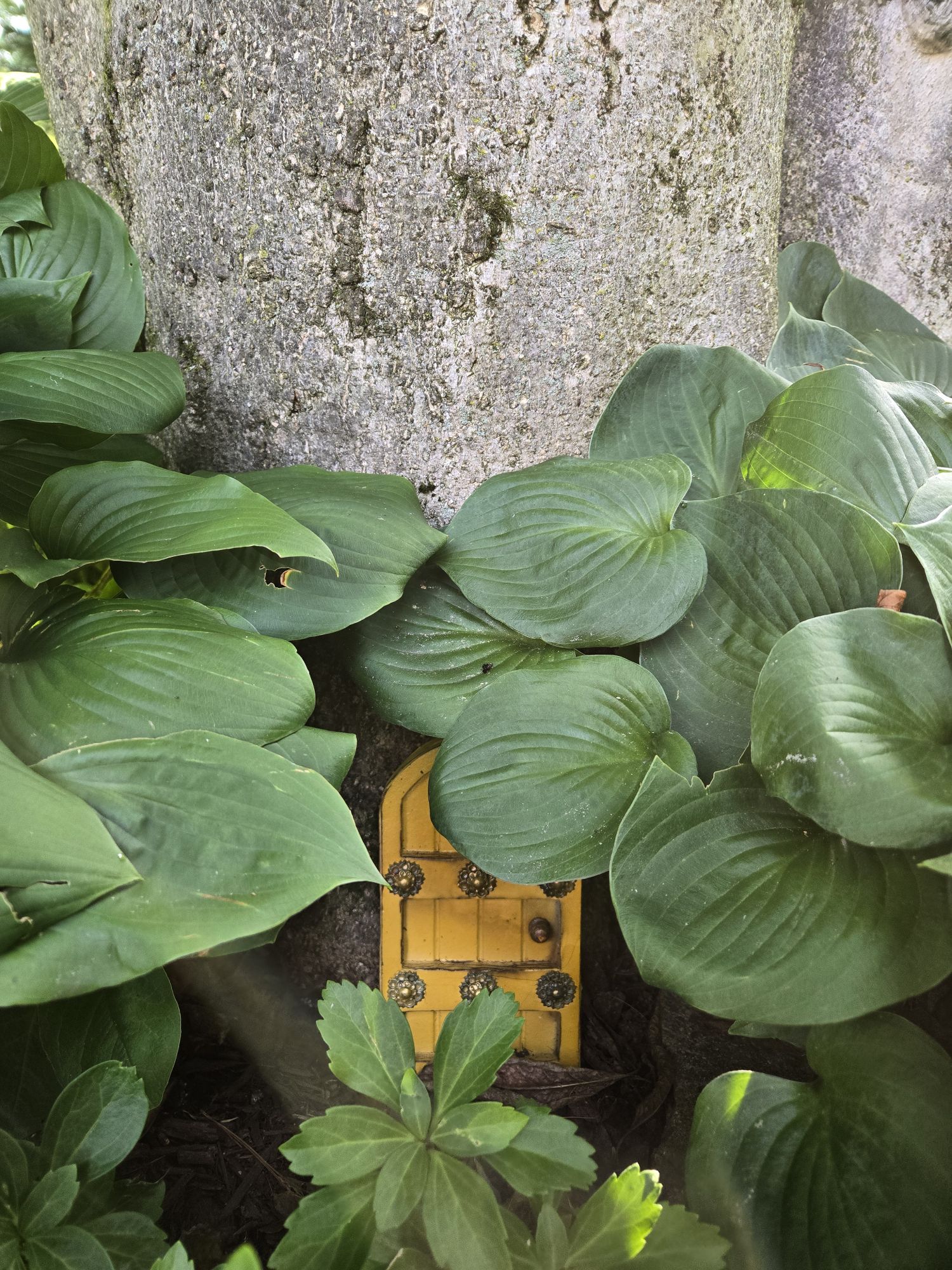
What mysterious door have you walked through?

What is challenging you and what are the judgements your mind offers?

What kind of poem would you like to write now?

What kind of art would you like to create?

What kind of breath would you like to take?

xoxoxo,

A.

The Spaciousness of Love, Revisited

Dear Readers, 

I wrote the original version of this essay around 2018, revised it in 2020 and am now revisiting it again (2024).  What you’ll find below is a more spacious version oriented toward finding ways to take right action and right rest. Both action and rest are necessary for a flourishing life. In light of tragic events throughout the world, revelations of social divides and injustice, the recent pandemic, climate extremes, and the continuing ripple effects of white supremacist patriarchal practices that have been passed down through the generations, action, rest, peace, and joy are our only way forward. 

I hope there is something here that resonates with you, and that it helps you to reach deeply into your own heart; find new ways of loving and embracing yourself, so that you may find new ways of loving and embracing the people in your own community, and so on outward to your village, township, parish, county, city, state, country, continent, and world.  My invitation is to start with yourself, and only then move outward, because you are just as worthy of your own love as your neighbor is.  The Energy of Life lives in all of us and encompasses all things.  The Creative Force of Existence is the hub; we are the spokes; this life is the rim of our ever-turning wheel of space-time.  And the closer we get to each other, the closer we get to all the infinite expressions of the Wholeness of Being.    

In the midst of every swirling bit of chaos in our world, I am reminded by my teachers that right action will look different for each and every one of us.  For some of us, our first right step might be to hold our children, or our young people close and feel what it feels like to be safe.  For some of us, getting involved in our community’s social justice groups is the most pressing immediate action.  And others of us will be called to speak in loving kindness with family, friends, and neighbors, or write letters of repair, of trust and strength and hope.  Still others of us will find ways to connect with our spiritual communities and allow the passion and guidance of our spiritual leaders, partners, and friends to bolster our hearts in gratitude and love.  

May we be drenched in Spirit wisdom, and soaked in gratitude, hope, and love.

The Spaciousness of Love

If love is kind,
it is not cruel .
If love is not jealous, 
it is content.
If love is not pompous,
it is humble.
If love is not inflated,
it sees rightly.  

If love is not rude,
it is enlightened. 
If love is not self-seeking,
it is generous. 
If love is not quick-tempered,
it is tranquil.
If love does not brood over injury,
it is reparative.
If love does not rejoice over wrongdoing,
it offers compassion.
If love bears all things,
it does not turn away.
If love believes all things,
it does not deny. 
If love endures all things,
it does not cede. 
If love never fails,
it always triumphs.

There are jewels to be found throughout ancient scripture, and in this exploration, we’ll look to both Western and Eastern wisdom traditions. In the Christian tradition, the New Testament offers one approach to love and to loving. When we look in the tenth chapter of the Gospel of Luke, a scholar of Jewish law asks Christ, “Teacher, what must I do to inherit eternal life?”  Jesus says to him in reply, ““What is written in the law? How do you read it?”  The scholar responds with what we know as The Greatest Commandment:  “You shall love the Lord, your God, with all your heart, with all your being, with all your strength, and with all your mind, and your neighbor as yourself.”  Jesus replies to him, “You have answered correctly; do this and you will live” (Luke 10:25-8).

From this quick exchange it seems our purpose on earth is simple, our mission, obvious, and the answer to the question of inheriting eternal life, a short one: love.  That’s it.  Nothing more, nothing less.

Photo by Pixabay on Pexels.com

However, as simple as love appears to be, isn’t it simultaneously complex?  What, exactly, is love?

In his first letter to the Corinthians St. Paul articulates clearly and beautifully what love is and what it is not, what love does and what it does not do.  And he acknowledges that our actions can be either devoid of love or infused with it.  We can serve in bitterness and resentment or in humility and compassion.  Even our most helpful of actions can be empty of love, performed in a negative spirit that crushes our own and that of the recipient.   St. Paul even goes so far as to proclaim that love is the greatest of all virtues, greater than faith and greater than hope:  “Love will remain even when faith has yielded to sight and hope to possession” (USCCB Commentary).

Thankfully we can look to these guidelines and explanations of love to give us a starting point, a kind of pathway forward, but I know how much I stumble and wander about aimlessly, how often I fall and clamber in the dark of my ignorance, for even though I hear the encouragement, “love one another as you love yourself,” it is as if I do not have ears; I still find myself begging to understand how.

The Greatest Commandment, love one another as you love yourself, assumes that we already know how we are to love ourselves.  

Zen priest and founder of the Center for Transformative Change, Angel Kyodo Williams, describes love as space:  “[Love] is developing our own capacity for spaciousness within ourselves to allow others to be as they are — that is love”  (OnBeing interview with Krista Tippett).

Photo by Pixabay on Pexels.com

If love is space, it is not a vacuum; it does not pull all things into itself but expands and allows people to be who they are.  Love makes room for the full expression of the human experience.  Unfortunately, there have been many times in which I’ve been loveless.  I’ve had a habit of pulling all things into myself, making myself the center of the multiverse, sucking the life out of life.  I have been selfish, judgmental, prideful, vain, and vacuous, full of disdain, contempt, and self-righteousness, as I suspect most of us have at one time or another.  It is a crushing cycle to find oneself in, as it damages others, as well as ourselves, on multiple levels.

I want to choose space.

Choosing space is hard.

It’s helpful to remember that love is not passive; it’s an action, whether or not it looks like action from the outside.  To love is an act of the will; it is to choose, and we can’t make choices without awareness.  To be aware is to choose to see rightly, to see ourselves as we really are, without quite so many labels, inherited or created, without stories in which we are always the protagonist; but instead, to choose to see ourselves simply as expressions of Divine Being worthy of love, worthy of forgiveness, by our sheer existence.  Awareness can help create this space to see, this space in which we can choose dignity, this space to act in love toward ourself and our neighbor.

All this takes practice.  When we work on our yoga mat to create space in the body for healing, we do so with awareness.  When we work on our meditation cushion to create space in the mind for choice, we do so with awareness.  And when the body is able to breathe and the mind is able to choose, we are able to work in our daily lives to create space in the spirit for loving ourselves.  The hope is that if for a moment we can focus on the tree trunk, instead of the ever changing leaves, perhaps we will be able to notice, for even an instant, our constant spirit, instead of our changeable thoughts and emotions. And from inside this space, this separation between ourselves and our thought-feelings, we will find compassion for ourselves, for our families, for our friends, and for each person we encounter.

Photo by Mateusz Sałaciak on Pexels.com

Creating space isn’t easy.  It requires openness of mind and heart, and even body.  This can be unnerving and can seem irrational.  As human beings we strive to protect ourselves from the possibility of physical, mental, and emotional harm and to fulfill our basic needs.  This is survival mode, and it causes us to lose touch with others and even with our truest selves.  As we frantically search and scan our surroundings, our circumstances, we become absorbed with negativity.   When this is our baseline, chronic way of functioning, we run the risk of closing in on ourselves, constricting our body-mind-heart/spirit, forgetting who we are, and who we are in relation to those around us.

We find spaciousness through embodied practices of curiosity & kindness. It really only takes a drop of curiosity, a kind pause, an open waiting, a question: What can I practice letting go of to make space for something else, something different, new, something like welcoming, or embracing? 

Making space for ourselves, and making space for one another are true acts of love.  Even paying close attention is loving, for where we place our attention, there also will our love be.  Bringing our awareness to the present moment, including the people and events within that moment, and allowing space for the moment to be what it is, is living in love.

Our practices of the limbs of yoga – the yama, niyama, asana, pranayama, pratyahara, dhyana, dharana – combine with Spirit wisdom, will lead us to the answers.  We’ll figure out what needs letting go of through embodied practice, listening to the wisdom held deep in our belly and deep in our heart.

So, we can’t quit. We can rest, but we can’t give up. We can’t deny ourselves the practices even when we are overcome with grief and anger – we take the grief and the anger to the practice with us. Just like we take the joy and the delight to the practice with us.  We take everything to the practice. Practice is truly our own best teacher.  

Photo by Pixabay on Pexels.com

Yoga instructor Bryan Kest speaks of a yoga practice on the mat as being like a mini-day, or a mini-life in which we encounter obstacles and challenges, and we practice being with them with equanimity, so that when we go out into the world we function from this baseline of non-reaction, with gentleness and self-compassion as our default mode.  Not only do we practice navigating difficulty as yogis, but we also practice nurturing ourselves through deep restorative postures and energy work that have the capacity to restore and bolster our right action in the world.  And this is paramount – we must care for ourselves so that we can care for others.  Continued, sustained practice creates in us the capacity to grow in wisdom and expand in love.  It is when we deny what is present, when we hide from what is happening, when we close in on ourselves and shut everyone else out through fear that our chests tighten, our hearts constrict, and our capacity for love diminishes.  Kyodo Williams encourages us when she says, ” for people who are not monastics, the world is our field of practice.”

And so we practice. We get on our mat every day; we let go of reactivity, harsh self-criticisms, vanity and pride, greed and grasping; we start to cultivate space for responding, for healing, for choosing, and for seeing rightly. We fail. We try again.

Photo by Ahmed Aqtai on Pexels.com

We welcome wisdom into our heart and out of our heart and begin to understand what it means to be wisely generous and wisely selfish. These wise-heart practices keep us from overextending or overwhelming ourselves, so that we pace, renew, and restore and keep going. We take that spaciousness off our yoga mat, through the doors of our worship spaces, out of the forests and into the moments and circumstances of our lives. We practice; we practice some more, and we practice again and unceasingly, like prayer.

Love is not cruel; it is supportive and humble.  Love sees rightly and is enlightened.  Love is generous, tranquil, forgiving, repairing compassionate, courageous, honest, eternal, and triumphant.  Love is wise.

Love bears all things
because love is spacious.  It’s big enough.
It’s
always bigger.

Photo by Ylanite Koppens on Pexels.com

Love bears all things because love is spacious. It’s big enough. It’s always bigger. When we understand this and put it into practice by giving ourselves the space to be who we are without judgment, we will be able to give this same non-judgmental, inclusive, curious and kind space to others. From this place we will hear the encouragement, “Love one another as you love yourself,” and we will know – because we live it, because we feel it in our bellies and our bones.

Space is ever-expanding. 
So is love. 
Love never ends.

Practice in Virtues, Catholic and Yogic

As we continue to move through this season of anticipation here at the Catholic Yogi, the second week of Advent found our family practicing Understanding, and now, in the third week, the week of rejoicing, we are practicing Kindness.  As the weeks pass, much to my children’s dismay, we can’t happily throw out the patience we learned, the understanding we realized, or the kindnesses we are uncovering.  Instead, we are striving to create habits of these virtues and so carry them with us into our final week of preparing the way.

The kiddos cheer when they think “a week of being patient” has passed, the pressure’s off, no more patience needed!  But when we look at the root of all the virtures we find their life force is the same, Love.  So, in Understanding, we still find patience, and in Kindness, we still offer understanding.  When our fourth week of Advent brings Honesty to our door, I suspect patience, understanding, and kindness will inform our practice of truth.

The Eight Limbs of Yoga according to Patanjali offer Yamas and Niyamas as guidelines for ethical and moral behavior.  (For a quick peek at all eight limbs, check out this article by Mara Carrico.)  When I think of Patience, the second niyama, Samtosa, comes to mind.  It means Contentment.  Sometimes when practicing patience, finding contentment in our hearts is not only helpful, but necessary.  All the grasping that lives within our impatience is calmed when we are able to embrace the goodness of the right here and now.

Svadhyaya, the fourth niyama, is the study of the sacred scriptures and of one’s self.  This reminds me of Understanding.  When we seek to be understanding we can study our own habits, thoughts, and behaviors; we can study the scriptures of our own cultural and/or religious disciplines; and, finally, we can study the circumstances, experiences, and situations of others, of our close family, as well as members of our greater communities, even those we haven’t met.  When we have a better grasp of ourselves and others, empathy comes more easily.

Empathy has the ability to spur our feelings into action and take us from contemplation into motion.  Acts of Kindness resonate with the first yama, Ahimsa, meaning Non-violence.  In addition to avoiding harmful behaviors, we seek out ways to lighten the burden and bring comfort.

Satya, the second yama, means Truthfulness and is a great tool in our practice of Honesty.  (You can read an excellent article by Judith Hanson Lasater on the practical applications of truthfulness here.)  When we are sincere in our interactions with others, way down in the depths of the daily things, like “Are you hungry, would you like to eat before we leave?”  “Yes, I am.  That would be great,” we find there is less strife, less bitterness, less frustration, and less regret.

With all of these virtues swirling around in our hearts, what great gifts we can give to each other, not just one celebratory day each year, but here and now, way down deep in the daily living.

Happy Practicing!

The Catholic Yogi

~ For a more in-depth look at the Yamas, read Beginning the Journey by Judith Hanson Lasater, and for the Niyamas, read Cultivate Your Connections.