
Good Morning, Lovely: Opening Into Self

I have many teachers who invite me to see myself as worthy of love. Do you want to meet some of them?

My dog, Daisy. She always used to come to me when I was crying. Reminding me I don’t have to hide or perform anything for anyone in order to be loved. I can feel everything I need to feel. And she will check on me. She will stay with me. I practice remembering to stay with myself, even when it feels unbearable.

A friend in my community, KC. Every single time she sees me, whether at work or at our kids’ events, I hear her voice: “Hey, Gorgeous!” or “Hello, Beautiful!” with a huge smile and bright eyes. Every single time no matter what. It’s at such odds with my experience in society that it takes me by surprise every time. Eventually, I hope to not be surprised. I hope to just know. I say it back to her, “Hey, Beautiful.” It’s good practice.

One of my yoga teachers, MV. She tells us the story of tucking her kids in at night and telling them, “You are so lovable.” And she exhorts us to tell ourselves the same thing. And so now I end a lot of my yoga, resilience, and social-emotional-learning classes with these affirmations for my students to repeat if they’d like: I am awesome. I am amazing. I am soooooooooooo loveable.

Insight meditation teacher, Sylvia Boorstein, encourages self-compassion through terms of endearment in place of self-criticism and self-loathing. Among other invitations, she offers herself these words, “Sweetheart, you are in pain. Relax. Breathe. Let’s pay attention to what’s happening and figure things out.” I practice calling myself Sweetheart.

Another friend in my community, ST. Every singe time she sees me, whether at the grocery store or our kids’ activities, she literally yells, “Heeeeeey, Gorgeous Woman!” It doesn’t matter if I’ve just rolled out of bed or not. It doesn’t matter where we are or how far away she is from where I’m standing. It takes me a minute. I have to process. She also likes my hair? I say it back to her, “Hello, Gorgeous.” It’s good practice.

My restorative yoga teacher, Judith Hanson Lasater, shares her practice of self-compassion: Whenever she has moments of frustration or discontent, she says, “Oh, how human of me.” I love this. It reminds me to ask myself why I ever thought I needed to be something I am not.

Our rescue foster pup, Bruno. After months of living unabashedly as himself, growing and blossoming every single night and every single day, Bruno showed us who he was. He showed us who he is, who he wants to be, who he needs to be, who he must be. He taught me that there is absolutely no thing more freeing on this earth than being fully and unabashedly one’s truest self.

My sweet kids. They read my face. They ask me if I need hugs or help. When they are in the throes of their own brain-restructuring and hormone spikes and drops, they forget I’m human, just like I do. And then they remember, just like I do. They also honor their impulses to love. They say I love you when we part; they say I love you when we’re together; they say I love you when we’re nowhere close – whenever they feel it. I don’t do anything to win or earn their affection. I just am and they just are and love just is.

All the friends I text when I’m trying to figure out Life: CS, JS, KS, SD, SR, MD, JM, CC. They text me back. They are essential to my joy and my growth.

My husband. He shows up. When everything is terrible. When everything is pleasant. When everything is boring. When everything is tenuous. When everything is shit. When everything is sweet. He is: Constant. True. Consistent. Unflinching. Honorable. Considerate. Honest. Open. Willing. Integral. He is essential to my growth, my successes, my contentment, my ease, my mission, my vocation, and to fulfilling my heart’s desire, my sankalpa. His qualities and actions remind me that there is nothing I need to prove or attain. I am lovable simply because I am alive. Simply because I am me. Simply because I am.

Our new permanent pup, Bodhi. He is named for the tree of Buddha’s enlightenment. He is also named after surfers and gods, oceans, and air. Bodhi sits. Bodhi watches. Bodhi waits. Bodhi pays attention. Bodhi looks, at first glance, as if he has no thoughts – like he’s not thinking anything. And do you know what happens when you have no thoughts, when you are not thinking anything? The possibilities are endless. That kind of nothing is fully pregnant with everything. So when you look back at Bodhi long enough, all of a sudden you are full. He is comfort magnified. You can’t feel anything but love when he runs to you. I am practicing drinking this in.

Silence.
A silence that is planted and cared for.
A communal silence ushered into being.
A retreat space structured with ritual,
ceremony, gentleness, and support
so carefully curated it creates a circle
unspeakably spacious
and infinitely deep
the well
of unconditional love
pours over you from the inside –
from
the
INside (!)
And when I looked at her, wordless,
my yoga teacher cracked open
the silence and cradled my gaze,
my tears, my life
with her whisper,
The silence, she is so generous, isn’t she?


My invitation to you now is to open into your fullest self by acknowledging what is already true – so full that you break open into every color, every shade, every line, every texture, every curve, every spiral, every sound, every silence that you hold inside. Please, please write yourself a poem today. At some point before midnight, before morning, write yourself into being – with words or images – with letters or sketches – with lyrics or pictures teach yourself how to love you. Love yourself the way you’ve always wanted to be loved. Because you ARE.


Good morning, Lovely,
You are precious
golden and radiant,
You are gorgeous
kind and loving,
You are more than anything
I could have ever hoped for.
Please, please keep being
because I couldn’t
wouldn’t
won’t live without you.
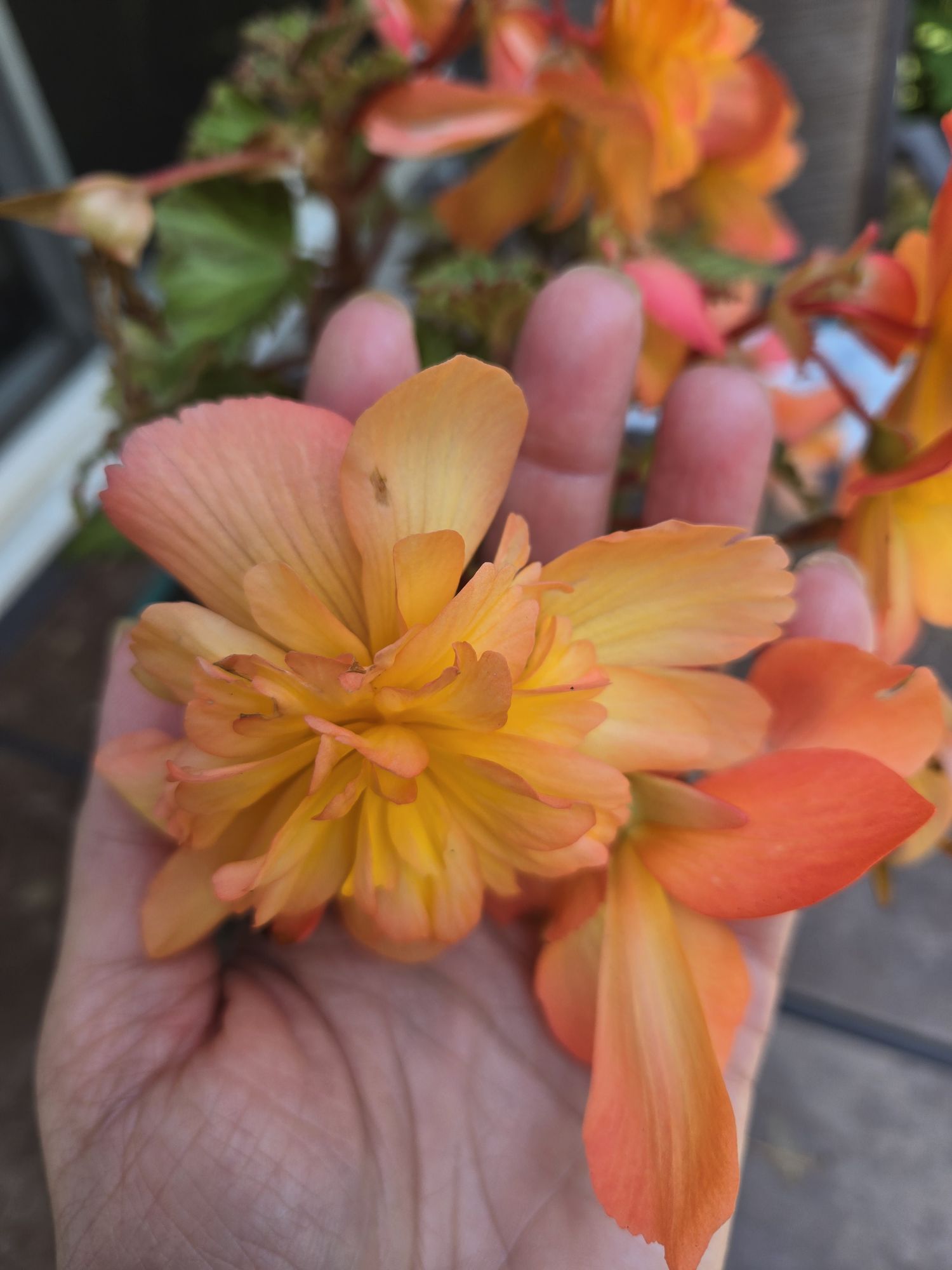

P.S. Please keep your eyes and ears out for your teachers, all those beings who teach you the fullness of your worth.

Bird Wings, Rumi, and Spanda Yoga

Dear Yoga Friends,

Important concepts and qualities of many contemplative paths are often described through the metaphor of bird wings. I have received the teaching of wisdom & compassion as two practices that lift a student out of suffering. They are both necessary, and the practitioner cannot fly without access to both.

A few days ago I was reading a translation of Rumi’s poetry by Maryam Mafi and Azima Melita Kolin, and I found this gem:

Seeker, when you feel your soul contracting
know it is for your own good
allow not your heart to burn with grief.
In times of expansion you spend
and this expenditure requires
an income of painful soul searching.
If it was always summer, the roots would burn
and the gardens would never become green.
Winter seems bitter but it is also kind.
When contraction comes, my friend,
behold the expansion within
be cheerful, do not complain.
The eyes of a child are fixed on the wants of now
while the eyes of the wise see to the end.
When you close your mouth
another one will open, seeking nourishment
in the mysteries of Spirit.
The sugar of sensual joy
is the fruit of the garden of sorrow
this joy is the wound, the sorrow is the plaster.
Learn to embrace sorrow
look straight at its face and joy will reappear.
All action sways between contraction and expansion
both as important as the opening and closing
of the wings of a bird in flight.

I’d read this collection before, and so I found my own annotations and underscores. This one touched me deeply:

“All action sways between contraction and expansion, both as important as the opening and closing of the wings of a bird in flight.”

My brain sparkled with connections, synthesizing everything I’ve read, heard, absorbed, and experienced throughout my yoga journey over the last 27 years – breath – movement – and spanda reverberated in my mind: Spanda – the divine vibration – the life force – the song of the sacred tremor of creation – the pulse of existence. Yes – All of THAT.

This made me feel like it’s time I pass some things along: the experiences I know of Tandava and the joys of courageous freedom. And, as Rumi says, “While still in the cage of your being behold the spirit bird before it flies away.”

I hope you’ll join me on the journey with wisdom and compassion as our guides:

(There WILL be a playlist!)

Making Space for Presence

This post explores the science of emotions, the research on social aspects of teaching, as well as the work of embodiment and how it can support us in moments of difficulty or overwhelm. At the end you’ll find an offering to create space for empathy & compassion for yourself & others.

Emotions
Dr. Eve Ekman is a contemplative social scientist and teacher in the field of emotional awareness and burnout prevention.  She defines emotion as “a process that is triggered in 1/25 of a second, lasts only about 30 – 90 seconds, and helps us respond to important challenges.”  Emotions get our attention and remind us of our values.  Being aware of our emotions allows us to acknowledge them without criticism and make wise choices about our role in what comes next.

Teamwork

Community 
Community spaces are filled with people, and as such are filled with emotions, as well as lots of triggers!  This is just as true for digital interactive spaces as it is for in-person events.  Whether you’re a leader, participant, student, teacher, parent, child, or all of these and more, spending hours each day in social environments creates an opportunity for emotional exhaustion

Research in education shows that practicing mindful awareness can help decrease burnout and increase an overall sense of well-being.  Because this is true in K-12 learning environments, we can reasonably extend these findings to include a variety of other group settings, such as professional and corporate offices, fitness centers, child care facilities, nursing homes, hospitals, and community events – basically, anywhere there are facilitators and participants, anywhere there are people(!)     

Practicing Presence
is the
Seed of Empathy.

Compassion
Practicing Presence within community requires a certain amount of non-reactivity.  Being able to notice and observe our own emotions allows for a space between what activates us (or triggers us) and our next thought, word, or action. The space allows us to respond skillfully rather than react choicelessly.  It also creates pathways to take care of our own needs in the moment.  This practicing awareness of our emotional process gives us insight into the experience of others, precisely because all of us are human. Happily, that new information we gain inside that moment of presence increases the likelihood that we can, and will, envision ourselves in someone else’s situation. 

These are the seeds of empathy.

Teamwork

Empathy leads to another key aspect of mindful awareness, the active partner of non-judgement:  compassion.  What’s great about compassion is that it’s for everyone, including yourself, and it can really help guide challenging conversations and all manner of interactions. 

Compassion allows us to see our life-partner, who is “letting the housework go” and seemingly choosing to not asking us about our day or our needs, as a beautiful human being who is fatigued and out of resources – not just someone who doesn’t care.  Compassion also allows us to see the student melting down in front of us as another human, just like us, in need of support.   Compassion can even bring us to a new perspective on the behaviors of our co-workers, family and community members, as well as complete strangers (and even people we might classify as the manifestation of enmity and animus – our enemy). 

Everyone is a human being – just like us. This fact is an excellent reminder that, perhaps most amazingly, self-compassion allows us to see our own selves as deserving of gentleness, acceptance, and encouragement, too ~the hallmarks of empathy.  

SPACE
We experience emotions on a broad spectrum.  There’s a wide range of ways we can know anger, fear, disgust, sadness, and enjoyment.  And knowing that the initial emotional reaction only lasts 30 -90 seconds, it benefits us to wait it out, seeing if it subsides or changes before we say the thing we really want to say (that thing we feel absolutely justified in saying).  The magic in this moment is patience. And one support for practicing patience is to go ahead do something.

Teamwork

Here’s an embodiment practice for that. I call it SPACE because I love talking about, thinking about, and accessing spaciousness as a pathway to loving and being loved.  It’s a way of being present in my body that allows me both to notice and observe my emotions, as well as wait for them to change or subside before I choose my next thought, word, or action.

  • S – settle
  • P – pause
  • A – abide
  • C – center
  • E – expand

Basically, SPACE creates space.  And space allows for compassion. 

First, I settle into my body by feeling my feet and noticing gravity. 
I pause and breathe. 
I abide in the present moment. (Rest.)
I find my center.
And then I expand from there – breathing in and growing my ribcage in all directions. 

By expanding, I’m creating physical space inside my body, bringing about sensations associated with happiness, freedom, and joy.  I’m also creating intangible space between what is said and done, and what is understood and experienced.  No one knows I’m doing this.  I can settle, pause, abide, center, and expand while I am listening to another person speak or while I’m experiencing their actions.  This embodied work allows me to feel grounded and gives me the space to choose what I will say and do, as well as what I will not say and what I won’t do.  

Spaciousness

KEEPING ON

Continue practicing awareness. 
Keep non-reactively observing. 
Carry on with feeling your body and making space. 

If nothing else, the next time you notice a strong emotional reaction, let that be your cue to press and settle into your feet and expand from your center.  The breath will happen.  You will pause and abide, and you just might find yourself and others surrounded by the spaciousness of compassion. 

Your Practice

While you are moving through your unique morning ritual, practicing asana, concentration, or meditation, consider practicing spaciousness:

  • Settle into your body by feeling your feet and noticing gravity
  • Pause and breathe
  • Abide in the present moment
  • Center yourself
  • Expand and grow your spacious heart

Then, take this wisdom with you, out of your practice space and into the world!

(You don’t have to have a ritual that seems fancy or mysterious. Rituals can be practical! You can practice SPACE quite effectively, and beautifully, while you are brushing your teeth or enjoying a shower.)

With Love, Empathy, Compassion, & All Things Spacious

Amy

Universal Yogi

Photo by Diego Madrigal on Pexels.com

Photos credits: Photo by Maria Lindsey Content Creator on Pexels.com, Photo by Pixabay on Pexels.com, Photo by Kevin Blanzy on Pexels.com