Vinyasa, Hatha, & Creative Ashtanga

I realize the title seems to imply that this could be a lengthy explanation of definitions, differences, and similarities, but it’s really just a little story. (You might be pleasantly surprised or a bit disappointed, or maybe some of each!)

I hurt my hip in July of 2019 doing a yoga pose that didn’t really need doing, though it was fun, and I thoroughly enjoyed the experience. Until I didn’t. In July of 2020 my knee decided it had had enough. What it had enough of, however, I wasn’t really sure. All I had been doing was walking on cement sidewalks a few miles three times a day since April. (Remember April, May, and June of 2020?) I suppose that, combined with an active childhood that included a splash of gymnastics, 16 years of jumping back (and up) in Surya Namaskara A & B, and congenitally under-developed hip sockets and other misaligned joints and weaknesses, resulted in my knee swelling up and me thinking I had gout. Thankfully, I did not have to give up my favorite indulgences. It seems I’d rather have patellar tendonosis instead.
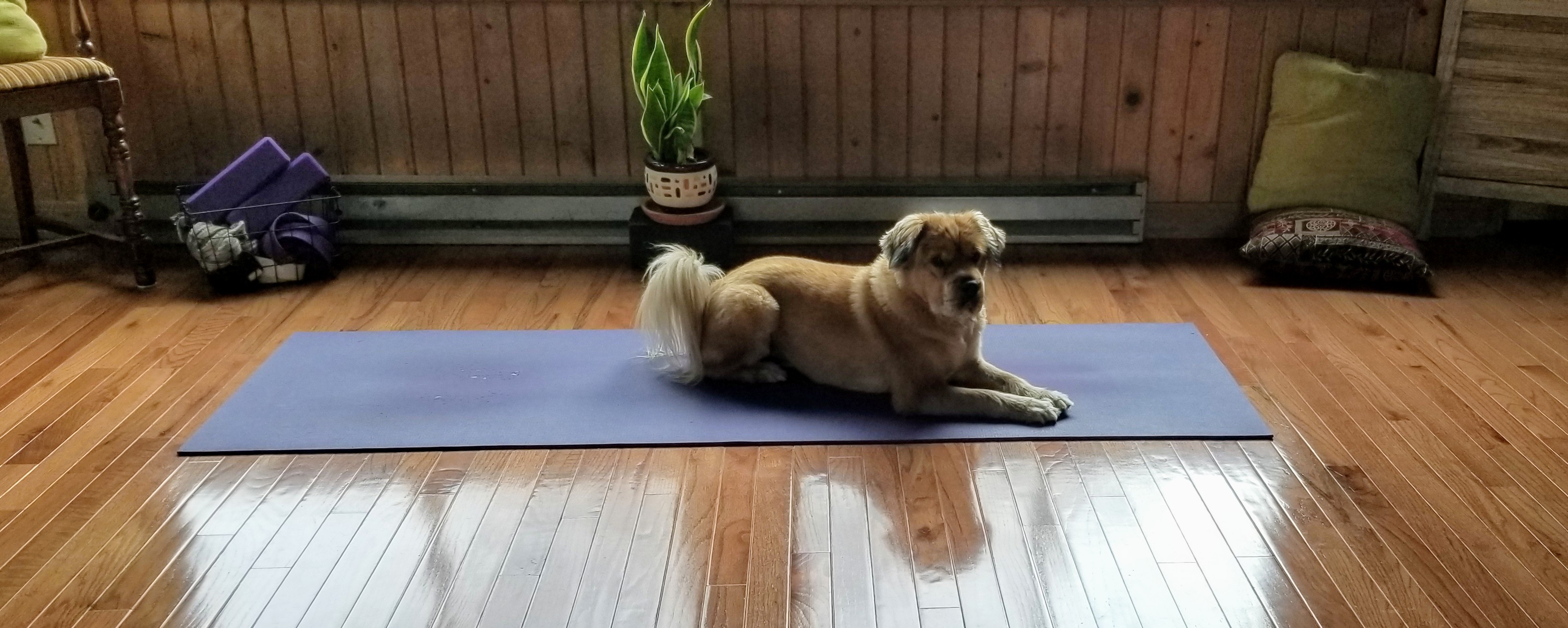
All this is to say that I’ve been enjoying a 10 day meditation challenge, and I took a “creative ashtanga” class this morning to see how it might feel, and my left hip was like, What are you doing? And my left knee was like, Have you been meditating for a long time? My right hip flexor said, What did you do yesterday? And my right shoulder? It was like, Are you kidding me…? After all we’ve been through…? Keep in mind, I made all the postures and vinyasas fit my current body and its needs and wants, and still my body was like, Huh? This doesn’t feel right.

So. There’s vinyasa and there’s vinyasa. I still find my flow even when I’m not jumping, doing push-ups, and raising and lowering my arms a million times. I still connect my postures like strings of pearls. I still love flowing and powering in my yoga practice. It just looks different on the outside.

So. I have hip dysplasia, and I never would’ve found that out if it hadn’t been for sugarcane pose. However, I’d rather not know I have hip dysplasia. Moving forward, if a pose isn’t really necessary, and it’s bordering on extreme, I’m not going to do it. (I’m sort of laughing as I type this because I couldn’t do any sort-of-extreme posture anymore. My body’s not havin’ it!) It kind of reminds me of the time my 2-year-old hit me smack in the third eye with a wooden block. I had enough sense to think, Well? That’s something. I suppose I’ll never be hit in the head exactly the same way ever again. And going forward, I steered clear.

So. What’s changing for you?

For Practice

  • What have you been forcing yourself to do that you really don’t want to do anymore (or ever really did), and you have a choice around it? What have you been putting yourself in the way of when you could shift to the side?
  • What would it feel like to practice the way you want to practice, not the way you think you should practice?
  • How do you think it would be to practice asana simply by feel. Instead of visualizing images of yoga postures (from books, apps, sites, or even in the mirror), close your eyes and feel your way into only the asana your body manifests comfortably. Yep, I said it – comfortably!! Asana = comfortable seat. 😉

Happy Practicing,

Amy

The Universal Yogi

What’s your Word?

Hello, Friends,

What’s your word?

I’ve had people text me this question recently, and have also encountered it in my coursework lately. For the last several years I’ve been using a guiding word like a north star but had completely forgotten about it this turn of the calendar. Thankfully, other people in my community have remembered! Typically, I use the first few days or weeks to let the word reveal itself, but I’m already thinking it’s something like Unfolding.

Your One Word

Your one word is what you want to practice for a set period of time. It’s like setting an intention about what you want to bring into being, or manifest through your thoughts, speech, and actions – how you want to show up in the world. Your one word is like a deep distillation of your heart’s desire, the diamond sparkling at your core.

Your word might reveal layers of your hopes and aspirations, what you hold dear. It can be anything that feels uplifting, encouraging, or inspiring. Last year my word was Ease, which wasn’t easy, but then a curious thing happened. “Allow” cuddled up right next to Ease, and I realized a certain amount of allowing was asking to be invited to my party. Ease needed a friend, and Allowing knew it. This speaks to a long held pattern of behavior in which I try to orchestrate, set up, and navigate everything and everyone so that everything and everyone can have the best-possible-experience-ever in any given situation. Well, one can’t experience “Ease” when one is busy doing all of that.

Photo by Rakicevic Nenad on Pexels.com

It’s Foundational

Your one word becomes the foundation from which you move.

Without realizing it, I began practicing allowing as a way to practice ease. This “without realize it” thing is key. The reason this can happen is because the one word is a sweet concentrated nectar that saturates other layers of our being. It doesn’t just “stay in your head.” After seeing it posted it on your walls, mirrors, & shelves, and repeating it while you walk, drive, and breathe, pretty soon the word is in your muscles, bones, & blood, similar to praying without ceasing; or really, it’s similar to anything you practice intensely to the point that you no longer need to think about it, like the violin, the sun salutation, shooting a basketball, typing on a keyboard, knitting, etc.

Practicing your one word is like building a new habit, the same way we might employ new behaviors during Lent or Advent. After several months my body-mind was functioning from a foundation of ease. This doesn’t mean I felt stress-free or easeful all the time (or any of the time). It means that because I wanted to feel ease in my life, I made decisions that would help bring this about. I would ask myself, “Will doing this bring about ease? Will I experience ease if I continue to talk about these things or keep quiet about these things?” Or “Is thinking these thoughts creating ease or blocking it?”

I didn’t need to make a conscious decision to practice “letting go of control.” Instead, my body-mind began incorporating the practice of allowing things to be as they are because I was basing all my decisions on a bedrock of ease. My being knew from experience that this had a way of bringing about the opposite of constriction, grasping, striving — you know, Eeeaaase. So while I wasn’t trying to exact control over every single external circumstance that made up the situations of my life, I was more in control of how I experienced my life, how I actually lived it.

Photo by Maria Orlova on Pexels.com

Variation

Maybe your word is an image. I happen to be word-oriented, but maybe you are super visual. What kind of image would you use as your guiding light through this next day, week, or series of months? Take some time to imagine, visualize, draw, or sketch. Or spend some time searching images on the internet, digital museums, or in books. Maybe find a scene on your next walk, run, or hike. Take a pic with your phone or just let it imprint in your mind. It might be something that offers you a sense of uplift, encouragement, inspiration, or awe.

The Wrap Up

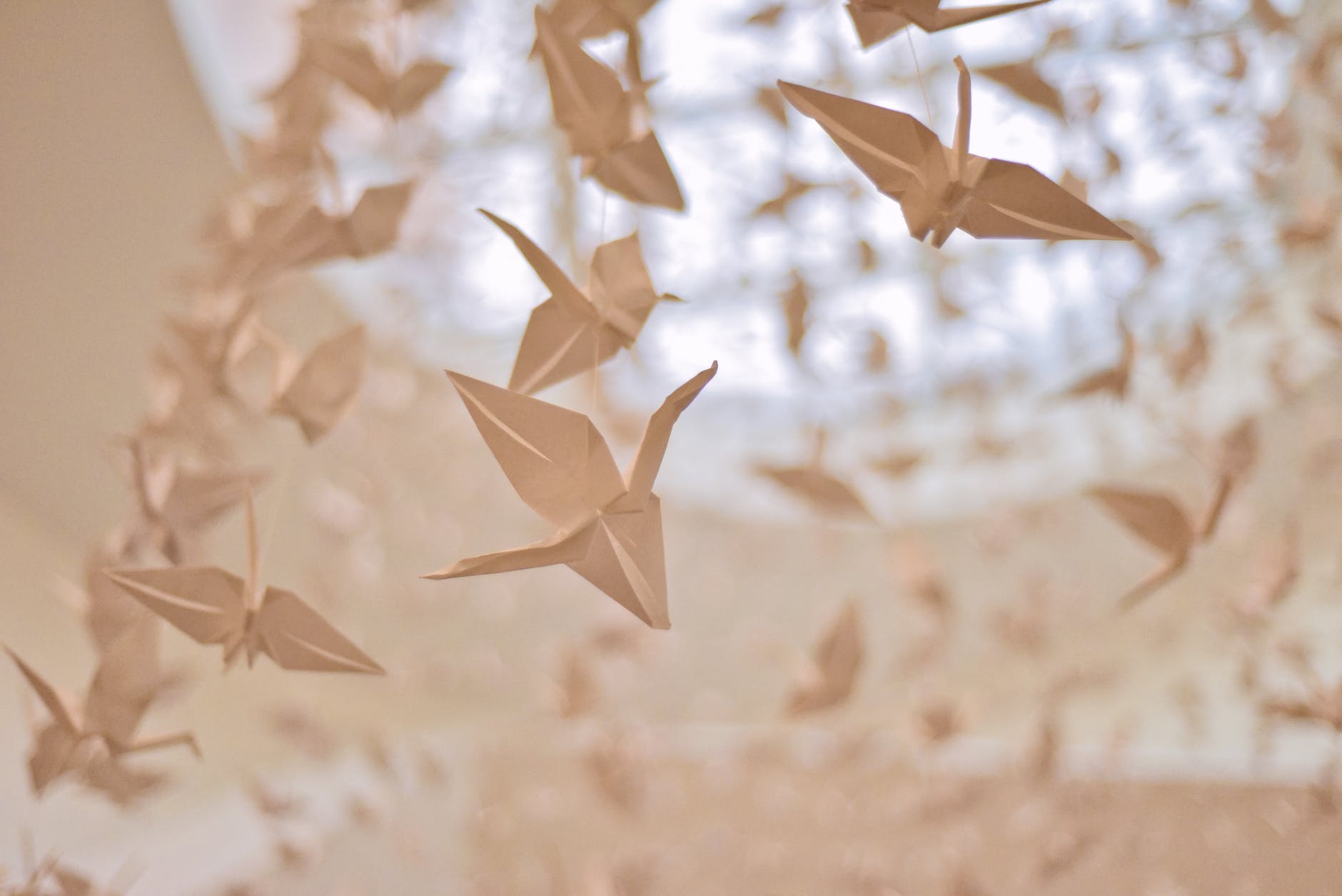
My meditation teacher speaks of the ways we might sometimes “origami” ourselves and other people into different packaging so that we, and they, are “more palatable.” I know that I have done this (for a looooong time!) and practicing ease & allowing has made this impulse less intense. It’s no wonder, then, that my new word is revealing itself to be Unfolding even as I write this post!

Some things to try:

  • Spend time in meditation, contemplation, centering prayer, some combination, or any other inner listening practice, and be open to whatever arises. Spend time walking, running, hiking, or any other meditative movement practice and be open to whatever arises.
  • When something arises, words, concepts, images, textures, sounds, colors, look beneath them asking what else wants to be seen or heard.
  • If something strange or unsettling arises, make a choice as to whether you feel resourced enough to engage with that. If so, inquire what might be underneath, what else wants to be seen or heard.
  • Be open to your unique guiding light or north star. You might have a word, an image, or even an sound.
  • Take steps to distill, concentrate, and saturate. If you start out with a sentence or series of phrases, distill down to one word. If you start with a series of images, concentrate on one aspect. If you start with a symphony, choose one tone.
  • Post it everywhere so that you see it. Repeat it constantly so that you can hear it, feel it, and maybe even taste it. Find ways to act it out once each day. Record it and play it back so that you can resonate with it. (Not sure how this works for an image, but maybe it’s a spoken description.)
  • Have Fun!
Photo by James Wheeler on Pexels.com

Unfolding, for me, feels like allowing space for people to stretch out, and maybe even blossom. This is true for myself, as well. Unfolding might feel uncomfortable. It’ll take time to allow the creases to smooth out. I might need to bend the other way for a little counter-balance. But that’s okay. I’ve got resources to lean on and dip into (yoga, family, God). Plus, the days keep coming, whether we like it or not, so there’s always more time for practice.

Wishing you many amazing, crazy blessings right now and then also the next right now,

Amy

The Universal Yogi

PS. Feel free to get in touch and share your word, image, or sound. It’s fun to share! Email amy@thecatholicyogi.com.

Photo by David Yu on Pexels.com

Honoring & Releasing

Hello, Yoga Friends, Happy today!

Here’s an offering of practices for you.

This class is Yoga for Body-Mind & Heart: Practices for Honoring & Releasing. It was inspired by my teacher, and begins with seated centering, followed by a meditation of honoring and releasing. And then gentle moving, stretching, and opening the front body using the floor as a yoga prop.

Gather some pillows, blankets, or towels and a yoga strap or scarf. These items are not necessary but might make things feel more supportive.

To the casual observers, it might look like we’re just rolling around on the ground, but we’ll know the good playwork taking place. Expect opportunities to stretch the shoulders, chest, hips, abdomen, back, & sides. When you feel like something’s missing. Just add it in!

May you be covered in the blessings you most need right now,

Amy

The Universal Yogi